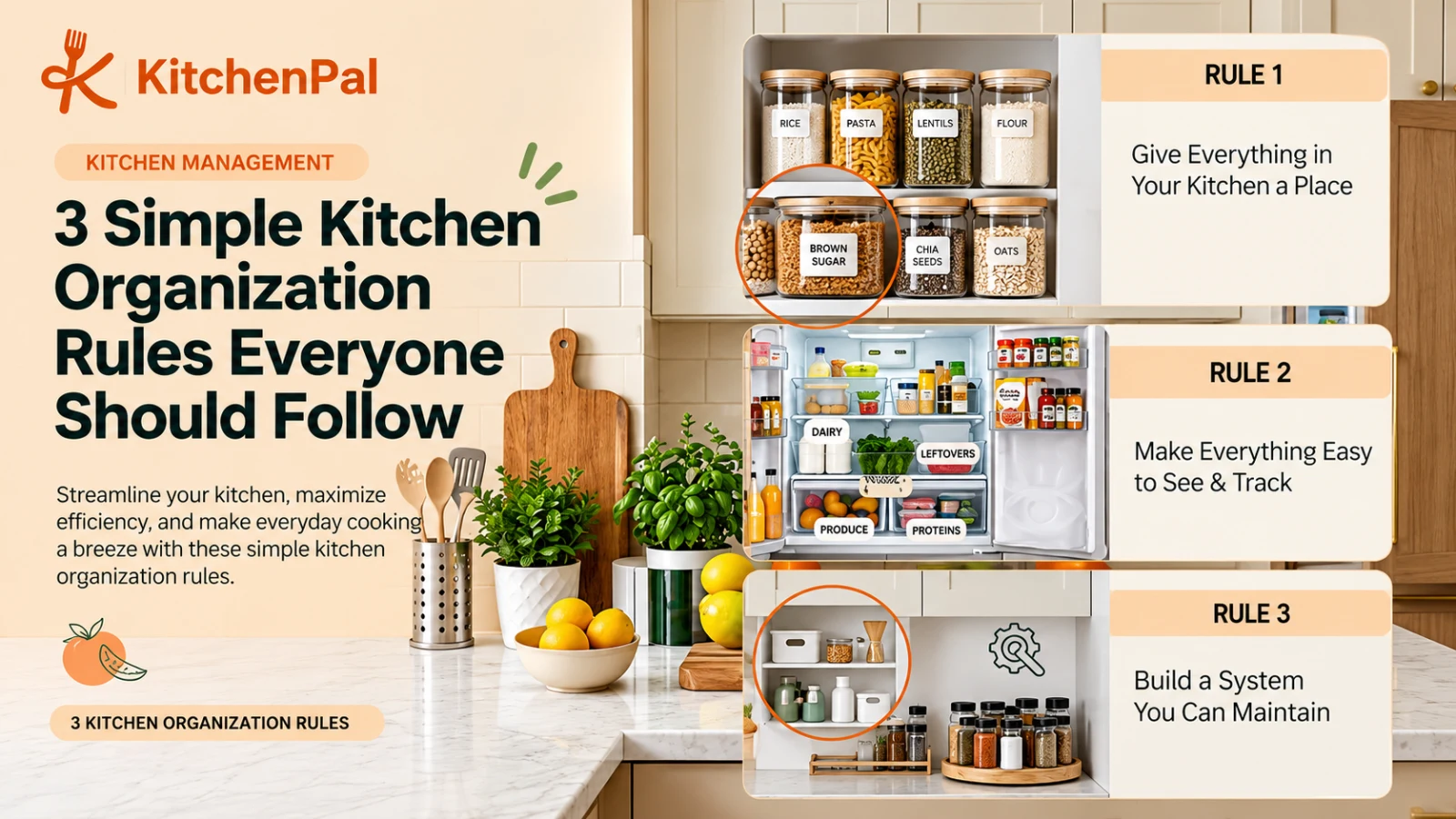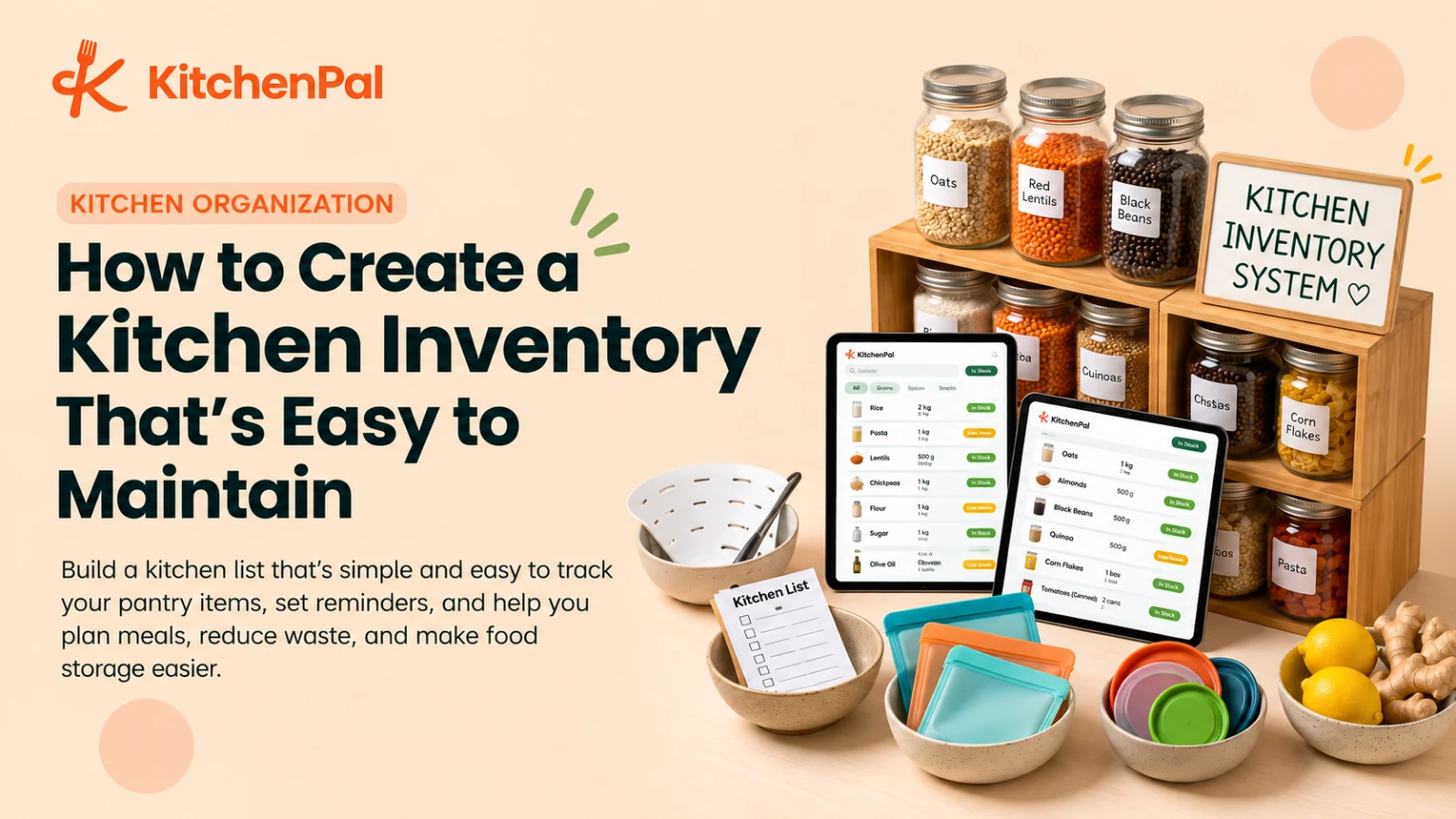
The key to maintaining a kitchen inventory is to keep it simple: track what you have, where it is stored, and what needs to be used soon. A practical system helps you avoid duplicate grocery purchases, plan meals around available ingredients, and waste less food without spending hours updating a list.
You do not need an elaborate spreadsheet or thousands of kitchen organization rules to get started. A few categories, a basic tracking method, and a short weekly review can turn your kitchen inventory into a useful part of your everyday routine.
What Is a Kitchen Inventory?
A kitchen inventory is a record of the food and ingredients you have in your pantry, refrigerator, and freezer. It helps you see what is available, what is running low, and which ingredients you should use before buying more.
Unlike a grocery list, which tells you what to purchase, a kitchen inventory shows what you already own. Together, they help you make more informed shopping decisions and plan meals around ingredients you have at home.
A useful kitchen inventory does not need to record every item in perfect detail. Start with everyday essentials, perishable foods, leftovers, and products you frequently forget you have. You can add more information as your routine develops.
How to Create a Kitchen Inventory in 5 Simple Steps
Creating a kitchen inventory starts with knowing what you have and finding a simple way to track it. These five practical steps can help you organize your food, avoid duplicate purchases, and keep your inventory easy to maintain.
Step 1: Start With Your Pantry, Fridge, and Freezer
Before creating a kitchen inventory system, take stock of the food you already have. Checking each storage area separately makes the process more manageable and helps you avoid overlooking ingredients tucked behind other containers.
- Pantry: Check grains, pasta, flour, canned goods, cooking oils, spices, snacks, and baking ingredients.
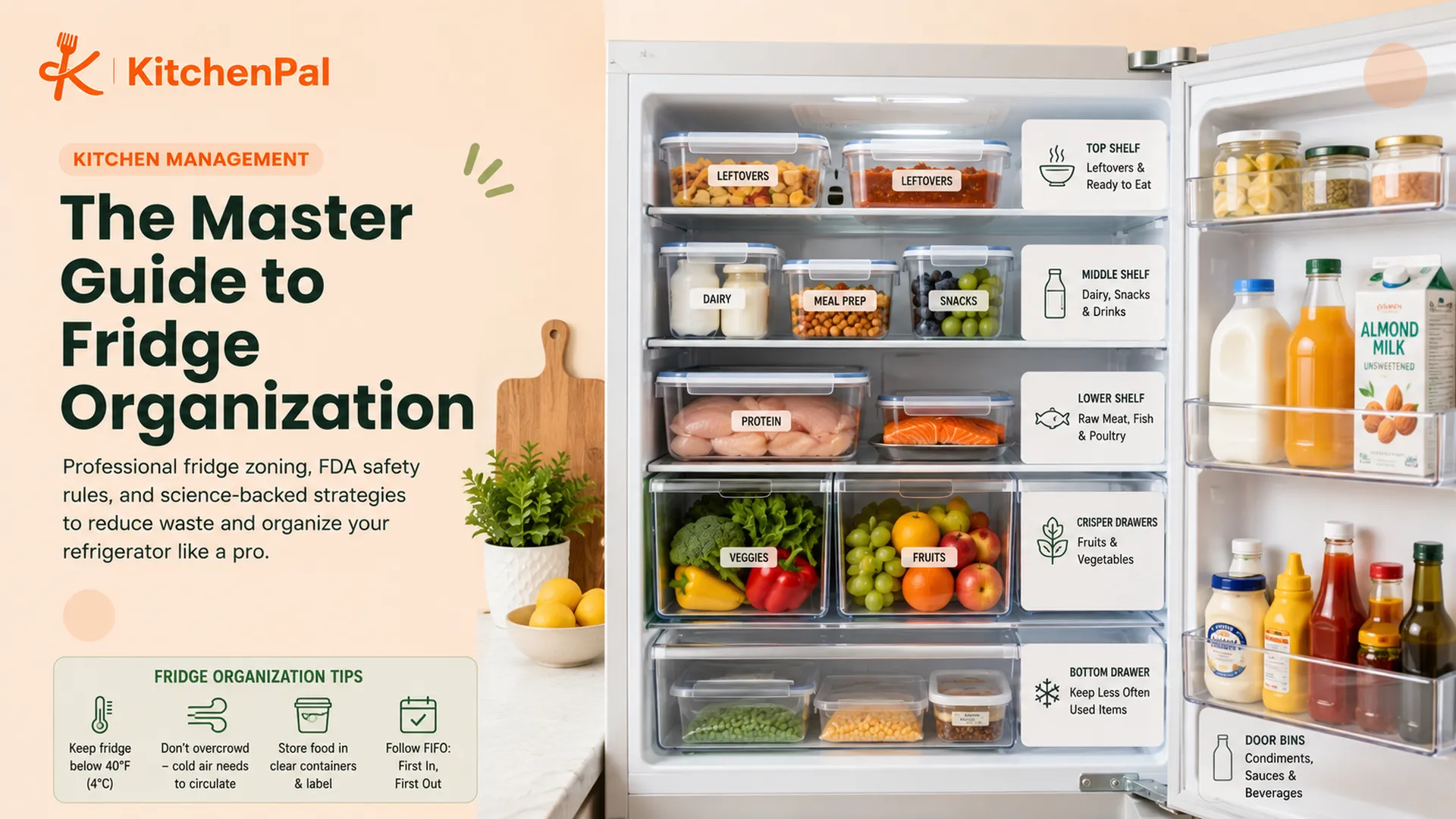
- Fridge: Look at dairy products, fresh produce, sauces, opened packages, leftovers, and other foods that need refrigeration.
- Freezer: Check frozen vegetables, meat, bread, prepared meals, and leftovers you have saved for later.
How to do it:
- Choose one storage area and take a quick look at its contents. You do not need to remove everything at once.
- Note the items you have, their approximate quantities, and any products that need to be used soon.
- Check the next storage area and repeat until you have covered the entire kitchen.
Start with the areas where food is most likely to get forgotten, such as the back of the fridge, freezer drawers, and pantry shelves. You can organize the storage spaces later if needed.
Step 2: Group Food Into Simple Categories
Once you know what you have, organize your kitchen inventory into categories. A clear structure makes it easier to find ingredients, update quantities, and identify gaps before grocery shopping.
Your categories should reflect how your household actually stores and uses food. For example, you might group rice, pasta, and flour under pantry staples, while keeping fresh produce and frozen meals separate.
How to do it:
- Create a few broad categories, such as pantry staples, canned goods, fresh produce, dairy, proteins, leftovers, and frozen foods.
- Assign each item to the category that makes the most sense for your kitchen.
- Keep the same categories in your inventory list so you can find and update items consistently.
Avoid creating a separate category for every small food group. If your system takes longer to navigate than it takes to find an ingredient, simplify it.
Step 3: Create a Simple Pantry Inventory List
A pantry inventory list gives you a clear record of the ingredients you have and the quantities available. You can use the same format for your refrigerator and freezer to maintain one complete kitchen inventory.

For everyday use, record only information that helps you make decisions. Item names and quantities are essential, while storage locations, expiry information, and low-stock notes are useful additions.
Here is an example of a simple kitchen inventory:
| Item | Quantity | Storage location | Note |
|---|---|---|---|
| Rice | 1 bag | Pantry | Regular staple |
| Milk | 1 carton | Fridge | Check use-by date |
| Spinach | 1 pack | Fridge | Use soon |
| Frozen peas | 2 packs | Freezer | Available for meals |
| Pasta | 2 packets | Pantry | Restock when low |
How to do it:
- Create a simple spreadsheet, notebook, or digital list with columns for item, quantity, location, and relevant notes.
- Record the foods you use regularly and anything that is perishable, expensive, or easy to forget.
- Mark items that are running low or should be used soon so they are easy to spot before shopping.
Do not aim for a perfect record on day one. An inventory that captures the important items accurately enough for everyday decisions is more useful than a detailed spreadsheet you stop updating after a week.
Step 4: Choose How You’ll Track Your Inventory
The best kitchen inventory system is the one you can maintain consistently. Some households prefer a paper checklist, while others find a spreadsheet or kitchen inventory app easier to update.
Each option has a different advantage. Paper is simple to start, spreadsheets allow more customization, and digital apps can combine inventory tracking with grocery lists and meal planning.
How to do it:
- Use paper if your household has a small number of regularly purchased ingredients and you prefer a simple checklist.
- Choose a spreadsheet if you want to customize categories, quantities, and notes without using a dedicated app.
- Consider a kitchen inventory app if you want to track items digitally, receive expiry reminders, or connect your inventory with shopping lists and recipes.
Consider who will update the inventory. If several people share grocery shopping and cooking, choose a method that everyone can access and understand.
Step 5: Update the Inventory as You Shop Groceries
Creating a kitchen inventory is only the first step. To keep it useful, update it when food enters or leaves your kitchen rather than waiting until the list becomes outdated.
Grocery shopping is a natural time to do this. You are already checking what you need, unpacking new items, and deciding where everything belongs.
How to do it:
- Before shopping, review your current inventory and identify what you genuinely need to replenish.
- When you unpack groceries, add new items and update quantities for foods already on your list.
- When you finish an item, use the last portion, or freeze leftovers, update the record if that change affects your next meal or shopping decision.
Focus on items that affect your plans, such as milk, eggs, fresh produce, cooking staples, and ingredients for upcoming meals. You do not need to log every small change if it adds unnecessary work.
How to Keep Your Kitchen Inventory Easy to Maintain
A kitchen inventory works best when updating it becomes part of your normal routine. You do not need to conduct a complete kitchen audit every few days. Instead, make small updates while cooking, unpacking groceries, and planning your next shopping trip.
Here are five habits that can help you maintain a kitchen inventory without adding unnecessary work.
1. Update quantities when something changes.
When you finish a carton of milk, open a new packet of rice, or use the last can of beans, update the quantity if it affects your shopping plans. Small updates are easier than rebuilding the list later.
2. Check perishable food regularly.
Review fresh produce, dairy products, leftovers, and other foods that need attention. The U.S. Food and Drug Administration recommends checking what you have and using or freezing food before it spoils. The guidance also highlights that confusion over food date labels contributes to wasted food in the United States.
3. Review your inventory before every grocery trip.
Check existing quantities before adding items to your shopping list. This simple habit helps prevent duplicate purchases and makes it easier to buy only what your household needs.
4. Keep your system flexible
Your inventory should change with your eating habits. If you rarely use a particular ingredient, you do not need to track it as closely as everyday staples. Adjust categories and tracking details when your current system becomes inconvenient.
5. Schedule a short weekly review
Set aside around 10 minutes to check your fridge, review low-stock items, and identify ingredients to use in the coming days. This is a practical starting point, not a strict rule. Adjust the time to suit the size of your household and kitchen.
Consistency matters more than detail. A kitchen inventory that is reasonably accurate and regularly updated will usually be more useful than an elaborate system that nobody wants to maintain.
How Kitchen Inventory Makes Meal Planning and Shopping Easier
A kitchen inventory helps you plan meals around available ingredients, avoid duplicate purchases, and identify food that needs to be used soon. The financial impact of food waste is significant: the U.S. EPA’s report estimates that uneaten food costs the average U.S. consumer $728 per year, or approximately $2,913 annually for a household of four.
Here are five ways a kitchen inventory can simplify everyday food management.
- Plan meals around existing ingredients: Check your inventory before choosing recipes. You may already have most of the ingredients you need for your next meal.
- Avoid duplicate grocery purchases: Review your stock before shopping to see whether you need more rice, pasta, cooking oil, or canned goods.
- Use food before it spoils: Identify fresh ingredients and leftovers that need attention, then prioritize them in upcoming meals.
- Coordinate family meal plans: A shared inventory and grocery list help household members see what’s available and avoid buying the same items twice.
- Simplify shopping and meal planning: Combine pantry inventory tracking, grocery lists, and meal planning to help you manage available ingredients and organize your next shop.
Your kitchen inventory becomes most useful when you act on it. Use it to decide what to cook, what to replenish, and what to use next.
Conclusion
Creating a kitchen inventory does not require a complicated spreadsheet or hours of organization. Start by checking your pantry, fridge, and freezer, grouping food into simple categories, and recording the details that matter most.
The real benefit comes from maintaining the system. Update it when groceries come in or ingredients run out, review it before shopping, and use it to plan meals around the food you already have.
If you want to bring inventory tracking, meal planning, and grocery shopping together, KitchenPal offers a digital way to manage these tasks in one place. Start with a simple inventory today and build a routine that works for your household.