The refrigerator is undeniably the heart of the modern kitchen. It serves as a centralized hub for our groceries, meal prep essentials, and leftovers. Yet, for many households, opening the refrigerator door brings an unexpected surge of anxiety. Instead of finding an orderly layout of fresh ingredients, we are often confronted by a chaotic jumble of half-empty condiments, forgotten containers of bygone meals, and wilting produce pushed into dark corners.
This lack of organization is far more than a minor cosmetic inconvenience. Household food loss is a global crisis of staggering proportions. In the United Kingdom, approximately 60% of all food waste originates from residential homes. In the United States, that number sits between 40% and 50%. Similarly, in Japan, about 47% of the nation's 5.2 million tonnes of annual edible food waste comes straight from private kitchens. Beyond the financial losses, an unkempt fridge acts as an energy drain and, most critically, a breeding ground for foodborne pathogens.
Fortunately, by applying professional kitchen strategies, understanding thermodynamic microclimates, and utilizing smart technology, you can completely transform your relationship with your refrigerator.
Part 1: The Definitive Guide to Refrigerator Zoning
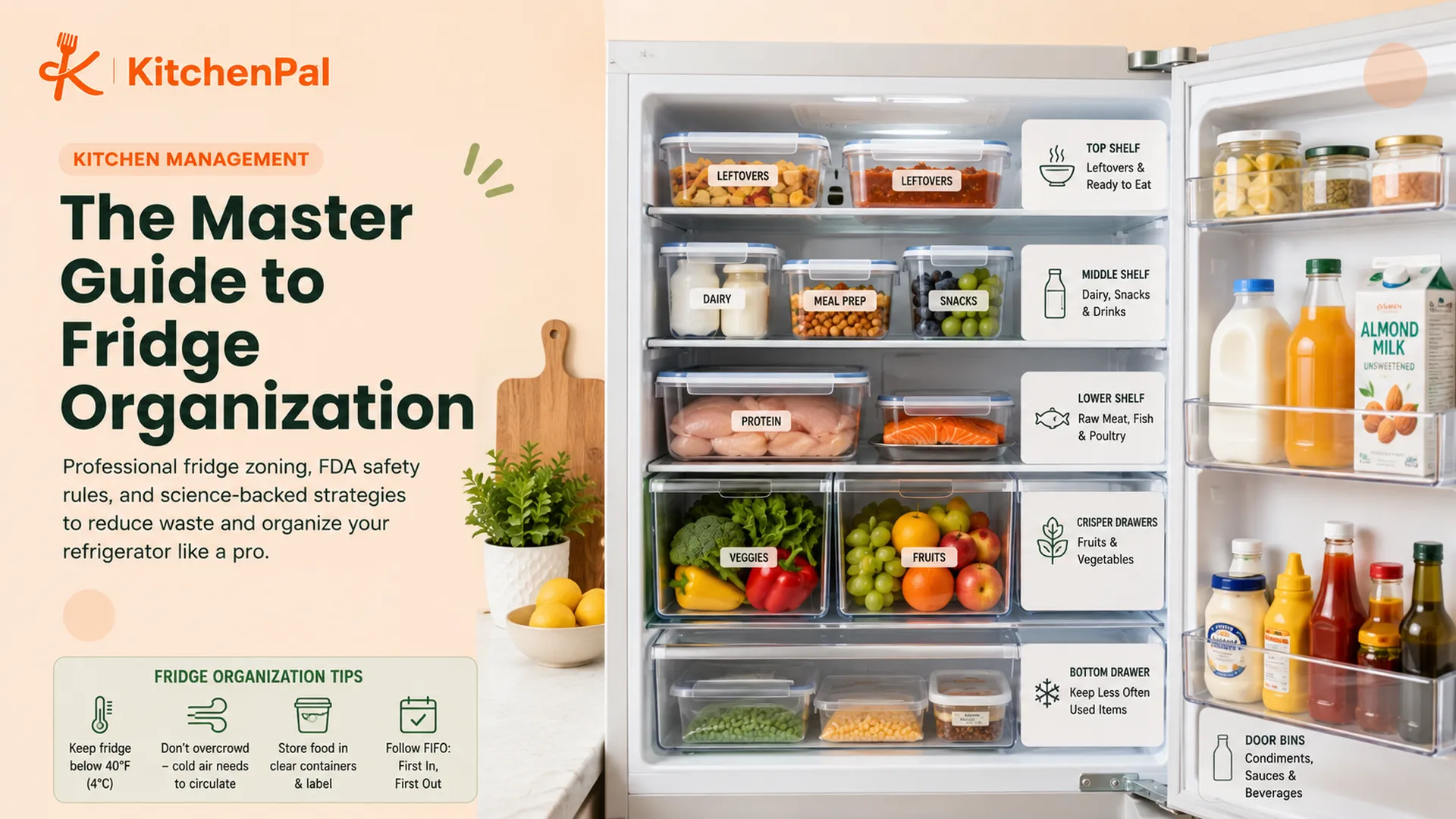
Many people view a refrigerator as simply a "big cold box" designed to keep everything at a uniform temperature. In reality, modern refrigerators are composed of distinct microclimates—zones where temperatures and humidity levels fluctuate significantly based on proximity to the cooling element, the fan, and the door. To maximize shelf life and ensure absolute food safety, you must store your food according to these specific internal zones.
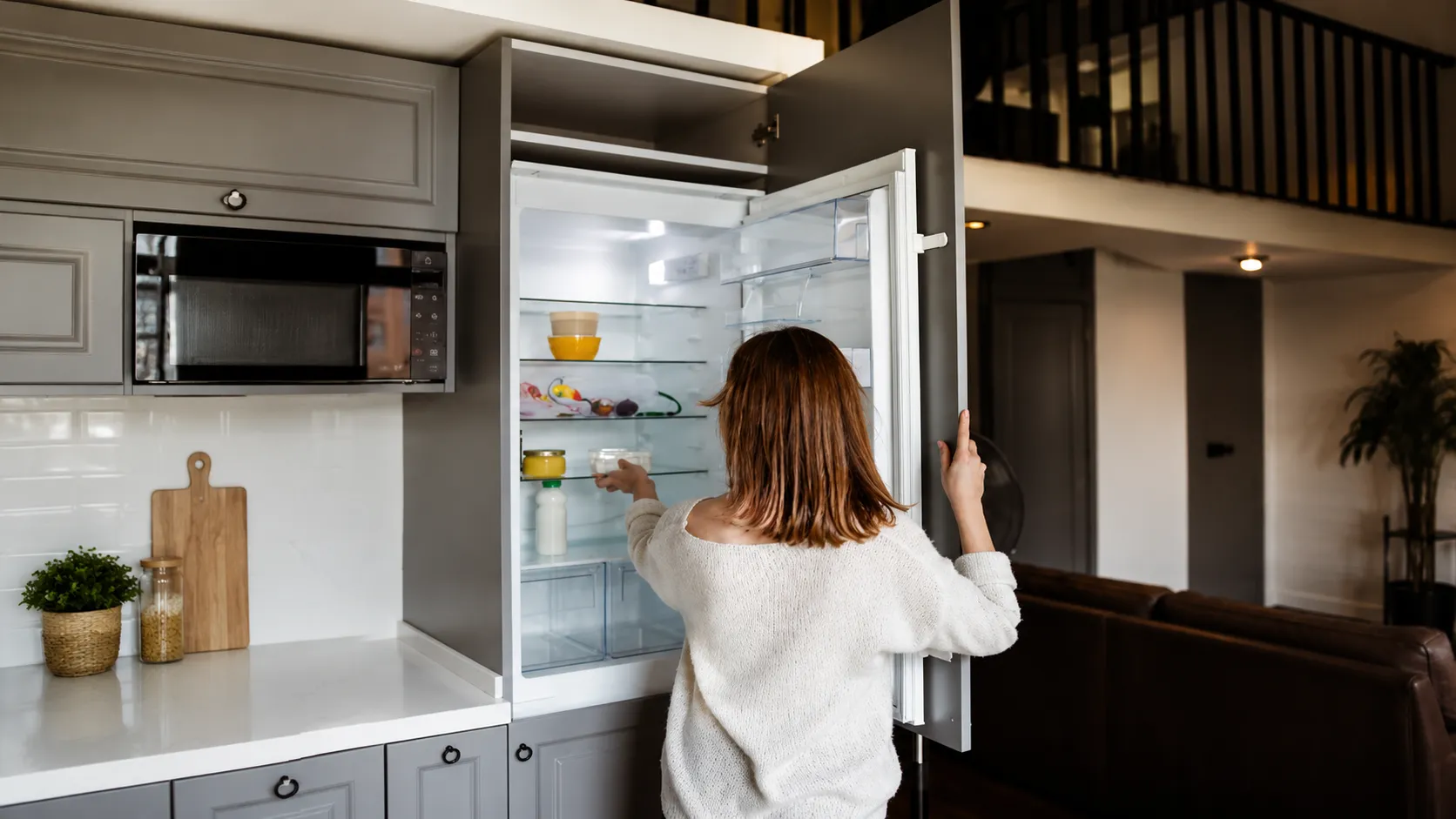
The Top Shelf: Consistent and Ready-to-Eat
The top shelf of the refrigerator possesses one of the most consistent temperatures throughout the entire appliance. Because it is safely removed from the hyper-perishable raw zones below, it is reserved strictly for ready-to-eat foods.
What to store here: Prepared leftovers, deli meats, pre-packaged snacks, beverages, and open condiments.
This is also an excellent place for fresh herbs, as the steady temperature prevents them from freezing or wilting prematurely.
The Middle Shelves: The Dairy Core
Slightly cooler than the top shelf, the middle shelves are ideal for items that require reliable, steady cooling but do not pose a risk of cross-contamination.
What to store here: Dairy products such as yogurt, cheeses, sour cream, and eggs.
Despite many refrigerator manufacturers placing built-in egg trays directly inside the door, culinary experts and food safety authorities explicitly warn against storing eggs there. The severe temperature fluctuations caused by opening and closing the door will rapidly degrade egg quality and compromise safety. Keep them on the middle shelf in their original carton.
The Bottom Shelf: The Coldest Zone for Raw Proteins
The lower section of your refrigerator is inherently the coldest part of the main compartment. More importantly, placing raw foods at the very bottom is the gold standard rule of professional kitchen safety.
What to store here: Raw meat, poultry, and seafood.
Safety Protocol: Always keep raw proteins in sealed containers or placed securely on a rimmed sheet pan or plate. This physical barrier catches potential drips or leaks, preventing highly dangerous pathogens (like Salmonella or E. coli) from raining down onto other foods.
Crisper Drawers: Humidity Regulation
Crisper drawers are designed to manage moisture levels, creating optimal environments for fresh produce. If your appliance features adjustable vents, you should ideally split your drawers into two distinct settings:
- High-Humidity Drawer: Close the vents entirely to trap moisture. This zone is designed for leafy greens (spinach, kale, lettuce), broccoli, carrots, and herbs that wilt when exposed to dry air.
- Low-Humidity Drawer: Open the vents fully to allow gases to escape. This drawer is optimized for fruits and vegetables that are prone to rotting or emit high levels of ethylene gas—such as apples, pears, and avocados. Keeping ethylene producers separate from ethylene-sensitive greens prevents your vegetables from prematurely turning yellow and mushy.
The Refrigerator Door: The Warmest Zone
The door is exposed to warm room air every single time the refrigerator is accessed, making it the absolute warmest and most unstable temperature zone within the appliance.
What to store here: Items containing natural preservatives or those highly resistant to spoilage, including high-acid condiments (mustard, ketchup, hot sauce), jams, juices, and butter.
Never store milk, cream, or perishable dairy products in the door. Doing so drastically accelerates spoilage and bacterial growth.
Part 2: Essential Habits and Tactical Tools for Fridge Mastery
To maintain order over time, you must integrate tactical habits and simple organizational tools into your routine:
The FIFO Method (First In, First Out)
Borrowed from the restaurant industry, the FIFO protocol dictates that older inventory should always be pulled forward, while newly purchased groceries are placed at the back. This basic rotation habit ensures that items are naturally consumed before they hit their expiration deadlines.
Labeling and Visibility
Unlabeled containers are the primary source of "mystery boxes" that eventually get thrown away out of fear. Expert organizers recommend keeping a roll of painter's tape and a permanent marker right by the fridge. Every leftover or opened package should be clearly labeled with its contents and the exact date it was put inside. For maximum accountability, consider hanging a magnetic whiteboard on or next to your fridge door to keep a running tally of items that need to be eaten immediately.
The Power of Clear Containers and Lazy Susans
Ditch opaque plastic containers in favor of clear glass or transparent, restaurant-grade acrylic bins. If you can easily see a leftover, you are significantly more likely to eat it. Furthermore, utilizing a lazy Susan (turntable) on upper shelves prevents small jars and condiment bottles from getting permanently lost in the deep, dark back corners of your appliance.
The Simple Japanese Method
In Tokyo, waste management researchers like Kohei Watanabe of Teikyo University have popularized incredibly straightforward, visual methods to reduce residential food waste. By utilizing simple colored tape and stickers, households can designate a high-priority "Eat Me First" zone inside the fridge. Grouping items that are close to expiring onto a single labeled tray or shelf removes the mental friction of deciding what to cook, ensuring that vulnerable items are finished off safely.
Core FDA Safety Directives
To keep food entirely out of the bacterial danger zone, the U.S. Food and Drug Administration (FDA) emphasizes three critical operational parameters:
- The 2-Hour Rule: Cooked foods and perishables must be refrigerated within 2 hours of preparation (or 1 hour if the ambient room temperature is above 90°F).
- Avoid Overcrowding: Avoid packing shelves completely solid. Cold air requires sufficient space to circulate freely; choking the airflow creates dangerous pockets of warm air where bacteria multiply rapidly.
- Thermometer Verification: Appliance dials are notoriously inaccurate. Always use a standalone refrigerator thermometer to verify that your internal temperature remains at or below the safety threshold.
Part 3: What the Science Tells Us: The Severe Hidden Pitfalls of Refrigeration
While we view our refrigerators as infallible shields against spoilage, peer-reviewed academic research reveals a much more complex—and sometimes alarming—reality. When handled incorrectly, refrigerators can paradoxically increase waste and elevate serious biological risks.
The Refrigerator Paradox: Why More Storage Leads to More Waste
An eye-opening study investigating the rapid adoption of household refrigerators in rural China provides an essential warning for modern consumers. Published in Resources, Conservation and Recycling, researchers utilized an endogenous switching regression model to analyze extensive data from the China Health and Nutrition Survey (CHNS).
The counterfactual analysis yielded a startling conclusion: the introduction of a refrigerator was associated with a 24.35% rise in household food waste and a 29.29% increase in calorie loss among refrigerating households.
The underlying mediator driving this waste was simple: over-purchasing and accumulation. The refrigerator gives consumers a false sense of security, encouraging them to store vast, excessive quantities of food. Because items are tucked away out of sight, they are forgotten and eventually spoil. The study noted that this negative effect only decreases when the food decision-makers possess higher levels of dietary knowledge and specialized kitchen management education.
Source: ScienceDirect — Refrigerator Usage and Household Food Waste
The Great Temperature Blunder: The Cost of a Few Degrees
Perhaps the most widespread mistake made by consumers worldwide is setting their refrigerator temperature too high. Multiple empirical studies show that domestic refrigerators frequently operate at an average temperature of around 7°C (44.6°F).
According to comprehensive UK economic and environmental modeling published in the International Journal of Refrigeration, simply lowering the average domestic refrigerator temperature from 7°C to the ideal target of 4°C (39.2°F) would yield massive rewards. This minor adjustment would significantly extend the storage lives of chilled foods, saving an estimated £162.9 million ($207 million) of food waste annually.
When factoring in items that are mistakenly excluded from refrigeration, the potential national savings balloon to £283.8 million ($361 million) per year, while actively preventing up to 578,383 tonnes of CO2 equivalent emissions. Experimental assessments proved that the minor increase in domestic electrical costs associated with cooling the fridge to 4°C (£80.9 million) is profoundly outweighed by the immense financial savings of reduced food disposal.
Source: ScienceDirect — Chilled Food Storage Temperatures and Waste Mitigation
The Microbial Danger: Ready-to-Eat Meats and Listeriosis
Failing to practice proper zoning and shelf hygiene carries acute health risks, particularly regarding Listeria monocytogenes. Unlike many other foodborne bacteria, Listeria can actively multiply at refrigerated temperatures.
A critical risk-assessment study published in the International Journal of Food Microbiology targeted the consumption of ready-to-eat (RTE) cooked meat products. The research demonstrated that a significant percentage of consumer listeriosis cases stem directly from domestic storage errors.
To mitigate these risks, the study emphasizes two non-negotiable rules for consumers—especially vulnerable demographics like the elderly:
- Zoning: Always store opened RTE cooked meats strictly on the recommended bottom or middle shelves to isolate them from temperature swings.
- The 3-Day Rule: Once a package of deli or cooked meat is unsealed, it must be completely consumed within two to three days. Keeping it past this window drastically increases the probability of encountering a dangerous bacterial load.
Source: ScienceDirect — Listeria Risk Assessment in Domestic Refrigeration
The Fridge as a Moral Dumping Ground
This biological reality ties directly into the cultural and psychological findings of Dr. Anna Sofia Salonen from the University of Helsinki. In her qualitative study, Ordinary Overflow: Food Waste and the Ethics of the Refrigerator, Dr. Salonen explores how the refrigerator acts as a socio-material agent in our moral lives.
Her interviews reveal that instead of preventing waste, consumers frequently use the refrigerator to defer the guilt of throwing away food. We place leftovers in the fridge with the full knowledge that we likely will not eat them, effectively utilizing the appliance as an intermediate stopover on the way to the trash bin. Weeks later, when the food has visibly spoiled, we feel morally justified in throwing it away because it is "no longer safe."
Overcoming this psychological trap requires us to stop letting ingredients slide into the background of our consciousness.
Part 4: Streamlining Your Kitchen Management with KitchenPal
When we synthesize these organizational rules and scientific warnings, a clear theme emerges: manual tracking is prone to human error. We forget what we bought, we ignore expiration dates, we neglect proper food rotation, and we succumb to the "refrigerator paradox." This is precisely where the smart kitchen platform KitchenPal steps in to act as your digital assistant.
KitchenPal is a highly integrated mobile application designed to merge your pantry inventory, fridge tracking, shopping lists, meal planning, and recipe ideas into a single, cohesive ecosystem. It systematically breaks the cycle of food waste and safety blunders through several automated features:
1. Automated Inventory Tracker and Expiry Alerts
Instead of letting food slide into a moral dumping ground, KitchenPal allows you to map out your physical kitchen layout into distinct digital zones, including your cupboard, freezer, and refrigerator. Using its robust built-in barcode scanner—backed by a massive database of over 5 million products—or simple voice inputs, you can log groceries instantly as you unpack. The app automatically estimates expiration timelines for delicate items like fresh produce and fridge goods, sending proactive push alerts straight to your phone before those items rot. This functions as a digital version of the Japanese "Eat Me First" method on a household scale.
2. Live "Recipes by Ingredient" Engine
To directly counter the accumulation problem identified by researchers, KitchenPal features a dynamic recipe matching engine. It scans your current, real-time refrigerator inventory and instantly suggests millions of culinary ideas based entirely on ingredients you already own, prioritizing those closest to their expiration date. This prevents unnecessary trips to the grocery store and guarantees that leftovers and opened proteins are safely consumed within their recommended 48-to-72-hour windows.
3. Smart Grocery Lists and Meal Planning
KitchenPal removes the guesswork from grocery shopping by performing automated pantry checks. It tracks your historical usage to provide predictive recommendations, highlighting items you are running low on, recently finished, or frequently buy. When using the integrated calendar to plan your weekly meals, the app can export your required ingredients straight to a shared shopping list while automatically ignoring items that are already sitting safely inside your fridge.
4. Shared Family Ecosystem and Dietary Awareness
Because kitchen management is rarely a solo endeavor, KitchenPal synchronizes seamlessly across multiple devices in real-time. Family members can manage the pantry inventory, cross off grocery items, and collaborate on dinner plans simultaneously. Furthermore, the app caters to specialized wellness needs, allowing users to filter recipe scans and analyze nutritional scores according to strict dietary preferences, including Keto, Low FODMAP, Diabetes, Paleo, Vegan, and gluten-free diets.
By combining proper thermodynamic zoning habits with the automated tracking power of KitchenPal, any home cook can save hundreds of dollars a year, protect their family from foodborne illnesses, and significantly reduce their environmental footprint. It is time to stop treating your refrigerator as a black hole for groceries and start managing it like a pro.