You open a kitchen cabinet to find a new packet of flour, then discover another one tucked behind the rice. A few weeks later, you run out of lentils even though you thought you had enough. These small problems often happen when you cannot see what is actually available in your kitchen.
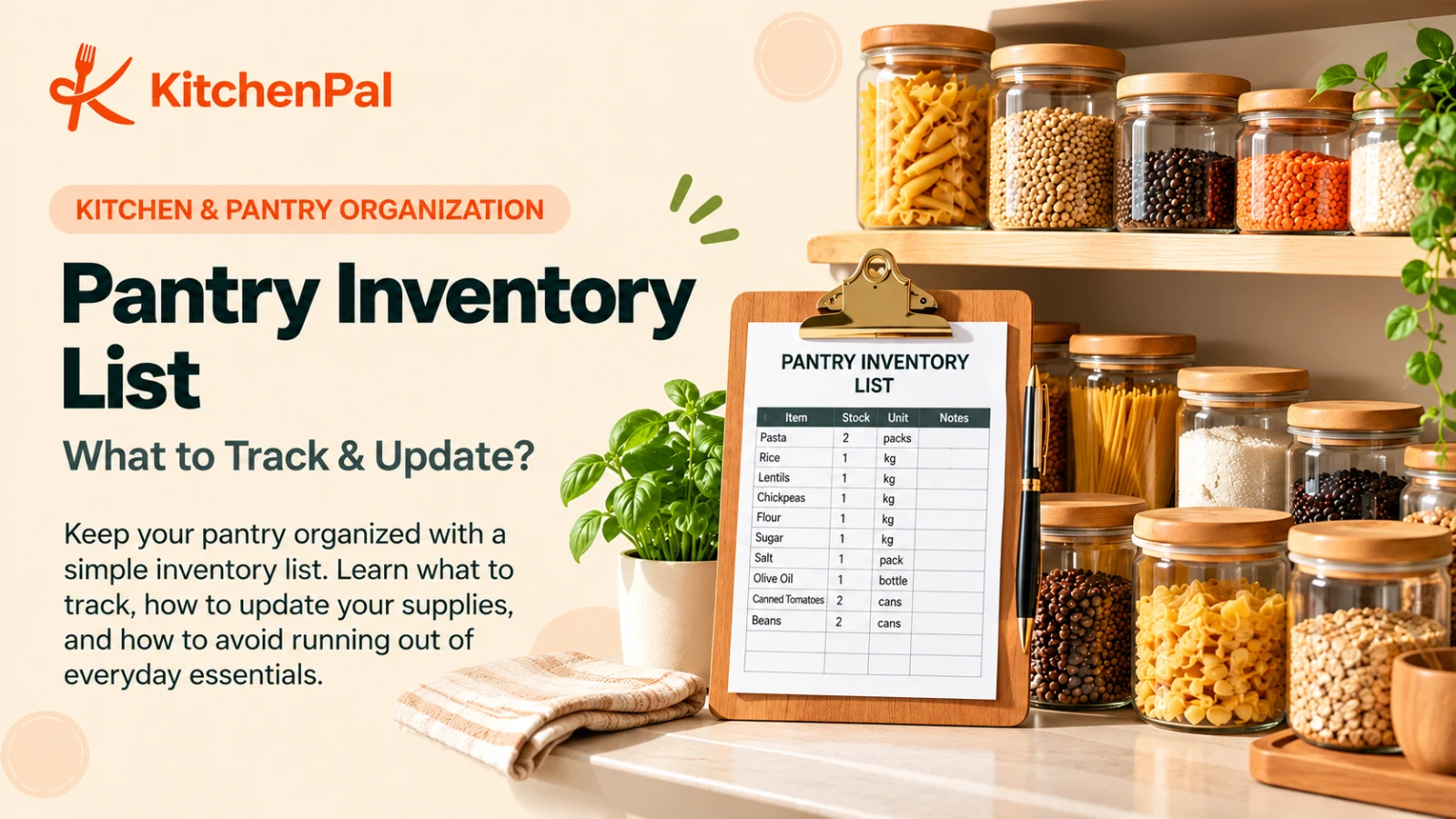
A pantry inventory list gives you a clear record of the ingredients and staples you keep at home. It helps you monitor quantities, identify items that need attention, and understand what should be replenished.
The goal is not to track every grain or update a spreadsheet every time you cook. It is to create a practical system that makes your household food supplies easier to manage.
What Is a Pantry Inventory List?
A pantry inventory list records the food stored in your cupboards and pantry, along with useful details such as quantities, storage locations, and relevant dates. Depending on your household, it can also track minimum stock levels and items that need to be used soon.
It is different from a grocery list, which focuses on what you need to purchase. An inventory tells you what is already available so you can make better decisions before adding items to your shopping list.
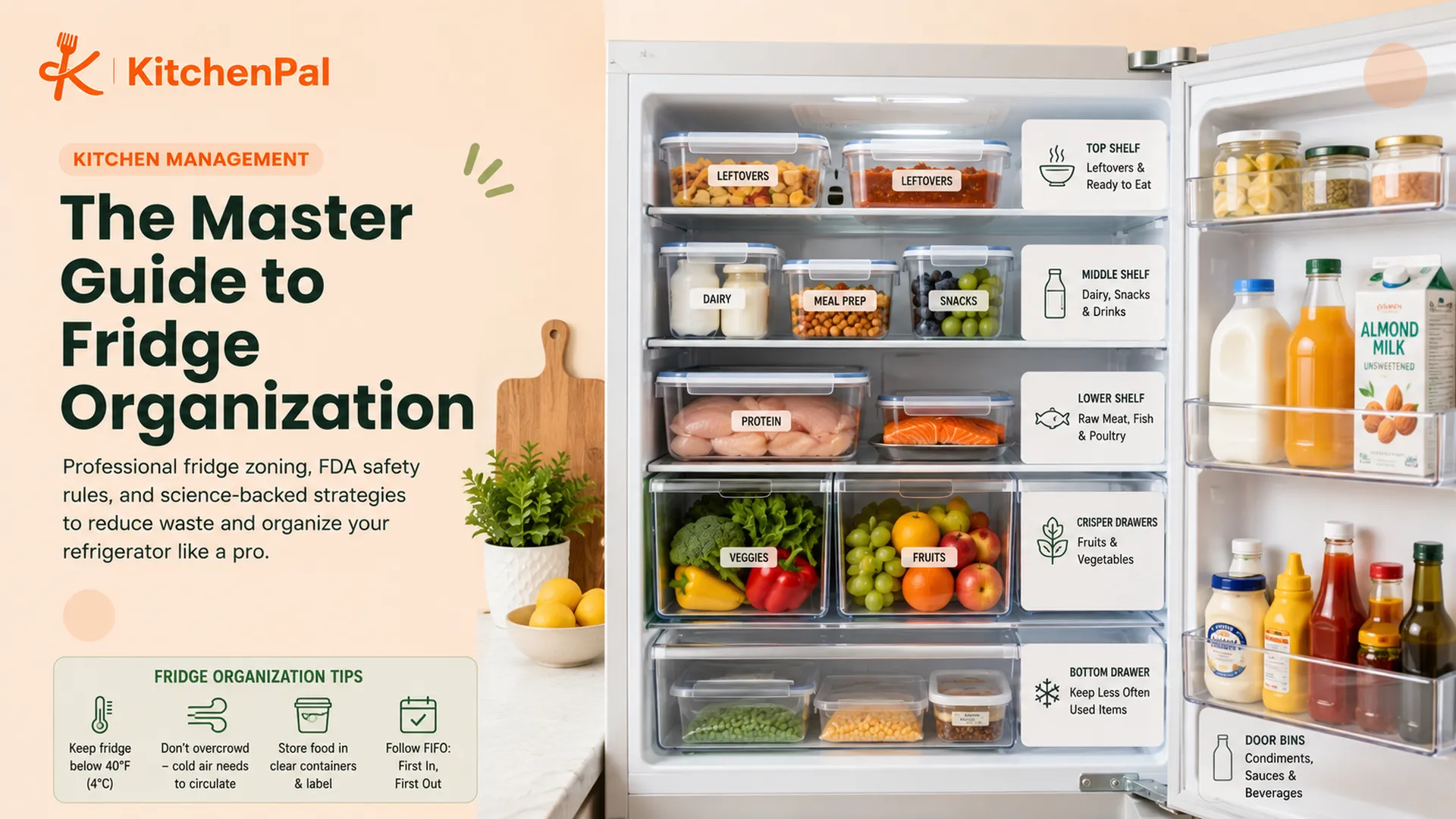
A broader kitchen inventory system can also cover food in the refrigerator and freezer. This is useful when ingredients are spread across different storage areas or when several family members manage the kitchen.
What Should You Include in a Pantry Inventory List?
A pantry inventory list works best when it records the details that matter most for everyday kitchen management. Track item names, available quantities, storage locations, expiry dates, and stock levels to know what you have and when to replenish it.
1. Food Item Names and Categories
Start with the name of each food item and group similar products together. Categories make a long inventory easier to scan and help you notice what you have at a glance.
For example, you might organize your list into:
- Grains and cereals: rice, oats, flour, and pasta
- Beans and legumes: lentils, chickpeas, and kidney beans
- Baking ingredients: sugar, cocoa, and baking powder
- Canned and packaged foods: canned tomatoes, sauces, and soups
- Cooking essentials: oil, salt, spices, and condiments
- Snacks and beverages: nuts, crackers, tea, and coffee
Use categories that reflect your actual pantry. If you rarely bake, there is no need to create a detailed baking inventory.
2. Quantity on Hand
The item name tells you what you own, but the quantity tells you whether you have enough.
Record practical amounts such as 1 kg of rice, half a bottle of oil, two cans of tomatoes, or one opened packet of oats. You can use grams, kilograms, litres, packets, or containers, as long as your units remain consistent.
Remember to include opened packages. An inventory that counts only unopened products can give you a misleading picture of your actual stock.
3. Expiry or Best-Before Dates
Dates can help you prioritize packaged foods and identify items that need attention. They are particularly useful for products that sit in your pantry for long periods.
However, date labels can have different meanings. The USDA’s guidance on food product dating explains how common date labels generally relate to food quality rather than automatically indicating that a product is unsafe.
Follow the manufacturer’s storage instructions, inspect packaging for damage, and use appropriate food-safety guidance. Do not rely on dates alone to determine whether food is safe.
4. Storage Location
Add a location when you store ingredients in several places. For example, rice might be in a large container on a pantry shelf, while extra supplies are kept in a separate cupboard.
If your inventory covers the whole kitchen, identify whether an item belongs in the pantry, refrigerator, or freezer. This helps everyone find supplies without opening every cupboard.
For foods requiring refrigeration, follow the product’s storage instructions. The FDA’s food storage guidance provides practical advice on storing foods safely at home.
5. Reorder Threshold
A reorder threshold is the quantity at which you consider replenishing an item. It helps you avoid discovering that a frequently used ingredient has run out just before you need it.
For example, if your household uses lentils several times a week, you might set a minimum stock level of 500 g. When the remaining quantity falls below that level, review your upcoming meals and decide whether to buy more.
Not every item needs a threshold. Start with staples you use regularly, then add others if the system proves helpful.
6. Item Status
A simple status field makes your inventory easier to act on. Instead of checking every quantity in detail, you can quickly identify which items need attention.
Try using four labels:
- In stock: Enough is available for current needs.
- Running low: The remaining quantity is getting close to your refill level.
- Use soon: The item should be prioritized based on its condition, date, or planned use.
- Restock: The item needs replenishing.
These labels are especially helpful when more than one person manages household supplies.
What a Useful Pantry Inventory List Looks Like
Here is an example of a pantry inventory register for a household that keeps common staples on hand.
| Item | Quantity on Hand | Storage Location | Status | Next Action |
|---|---|---|---|---|
| Rice | 1 kg | Pantry shelf | In stock | None |
| Lentils | 250 g | Pantry shelf | Running low | Review upcoming meals |
| Canned tomatoes | 2 cans | Lower shelf | In stock | Use older can first |
| Whole-wheat flour | 300 g | Airtight container | Restock soon | Check next shopping list |
| Oats | 1 opened packet | Pantry shelf | In stock | Check condition before use |
Note: The quantities and statuses are examples. Adjust them to your household’s consumption and storage arrangements.
Notice that the table includes both current stock and the next action. This makes the inventory more useful than a simple ingredient list because it helps you decide what needs attention without automatically treating every item as a purchase.
How to Create a Pantry Inventory List: 5 Step Process
Creating a pantry inventory list is easier when you build it step by step. Start by checking your current supplies, organize the items, record essential details, and establish a routine for keeping the information accurate.
Step 1: Check Your Pantry, Fridge, and Freezer
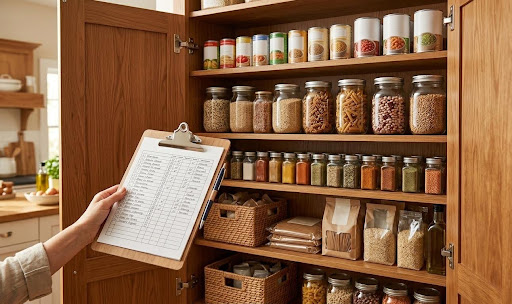
Begin by checking the food you already have at home. Look through pantry shelves, kitchen cabinets, the refrigerator, and the freezer to identify available ingredients, opened packages, duplicate products, and items that need to be used soon.
Check one storage area at a time and record items as you go. This helps you avoid overlooking ingredients tucked behind containers or stored on less accessible shelves.
Step 2: Group Items Into Practical Categories
Organize your ingredients into categories such as grains, pulses, canned foods, baking supplies, spices, and snacks. If your inventory covers the entire kitchen, create separate sections for pantry, refrigerator, and freezer items.
Use categories that match your cooking habits. For example, group pasta, rice, canned goods, baking ingredients, snacks, and cooking oils separately so you can find items quickly and check stock at a glance.
Step 3: Record Quantities and Relevant Dates
Add each item’s name, available quantity, storage location, and relevant expiry or best-before date. Include opened packages so your inventory reflects the food you can actually use, rather than only unopened supplies.
Use consistent units, such as ounces, pounds, grams, kilograms, litres, or packets. Mark items that need attention so you can prioritize them during meal planning and your next kitchen stock review.
Step 4: Choose a Tracking Method
Select a tracking method that suits your household. A paper checklist works well for a small pantry, a spreadsheet offers customizable fields, and a kitchen inventory app can help organize supplies across multiple storage areas.
Consider who will update the inventory and how often. If several family members manage cooking and shopping, choose a method they can access easily and update without disrupting their routine.
Step 5: Connect Inventory to Your Grocery Routine
Use your pantry inventory list before planning meals or preparing a grocery list. Check existing quantities, identify ingredients that are running low, and add only the items that need replenishing.
Review your inventory before your regular shopping day. If you use a shared grocery list app, coordinate it with your inventory so everyone can see what is available and what needs to be purchased.
How to Keep Your Pantry Inventory List Updated
Creating the list is the first step. Keeping it accurate requires a consistent routine that fits naturally into your kitchen activities.
1. Update It When You Use or Finish Items
When you finish a packet or notice that a staple is running low, update its quantity or status. Focus on ingredients that affect your next meal or shopping trip.
For items you use frequently, updating the inventory as soon as you finish a package helps prevent unexpected shortages.
2. Review It Before Grocery Shopping
Check your current stock before adding items to your grocery list. This helps you distinguish between ingredients you genuinely need and products you already have in sufficient quantities.
If you use a shared grocery list app, family members can also check existing supplies before adding duplicate purchases.
3. Use Older Items First
Arrange suitable products so that older stock is easier to reach and newer purchases go behind it. This approach, often called first in, first out, helps you use existing supplies in a sensible order.
Always follow the product’s storage instructions and check its condition before use.
4. Set a Weekly Inventory Check
Choose a regular time to review your inventory, such as before your main grocery shopping day. Check quantities, update stock levels, and identify items that need attention.
A short review can help you spot changes in household consumption without requiring a complete recount every time.
5. Adjust Quantities to Your Household
Your stock requirements may change when your family size, cooking habits, or meal plans change. Revisit your reorder thresholds when you notice that certain products consistently run out too early or remain unused for months.
An accurate inventory should reflect how your household actually eats and shops.
Pantry Inventory Mistakes That Make Tracking Harder
A few common habits can make even a well-designed inventory unreliable:
- Ignoring opened packages: Record usable quantities, not just the number of unopened packets.
- Using inconsistent units: Avoid switching between estimates and measurements without making the quantities clear.
- Setting arbitrary refill levels: Base stock thresholds on household usage and shopping frequency.
- Recording without updating: Add new groceries and account for items that have been used.
- Tracking too much too soon: Begin with staples and add details only when they help you make decisions.
- Separating inventory from everyday routines: Keep your list accessible so you can check it while cooking, unpacking, or planning meals.
The aim is to reduce the effort involved in managing food supplies, not create another chore.
How a Kitchen Inventory App Can Simplify Pantry Tracking
Managing food across pantry shelves, the refrigerator, and the freezer becomes easier when your inventory is organized in one place. A kitchen inventory app can help you track supplies and coordinate household tasks.
Look for features that help you:
- Track kitchen stock: Keep an overview of ingredients and available quantities.
- Plan meals: Choose recipes based on ingredients you already have.
- Manage grocery lists: Identify items that need replenishing before shopping.
- Coordinate with family: Keep everyone informed about household supplies and shopping needs.
KitchenPal brings kitchen organization, grocery planning, and meal planning together, helping you connect the food you have with the meals you plan to prepare.
Conclusion: Make Your Pantry Inventory Easy to Maintain
A useful pantry inventory list is not about recording every detail perfectly. It is about knowing what you have, understanding which items need attention, and keeping your records accurate enough to support everyday decisions.
Start with a few common staples, track quantities and relevant dates, and choose a method you can update comfortably. Once the habit becomes part of your kitchen routine, managing supplies and planning future meals becomes much more straightforward.
A pantry inventory list works best when it becomes part of your regular cooking and shopping routine. With KitchenPal, you can connect the ingredients you have with your grocery lists and meal plans, making it easier to stay organized and make better use of the food in your kitchen.