A well-organized kitchen isn’t about having matching containers, perfectly labeled shelves, or a spotless countertop at all times. It is about creating a system that makes everyday tasks easier.
You should be able to find what you need, know what food you already have, and put things away without thinking too much about it.
Good kitchen organization can also help reduce unnecessary food waste. The USDA estimates that about 30% of the U.S. food supply is lost or wasted at the retail and consumer levels. Confusing food date labels can also contribute to unnecessary food waste.
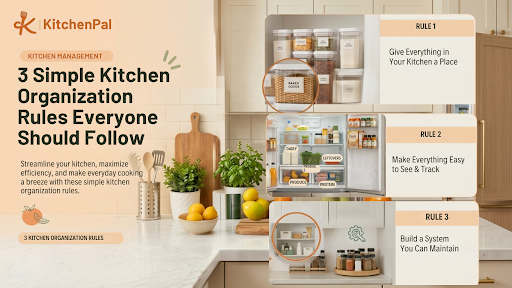
The good news is that you don’t need a complicated system. Start with three simple rules: give everything a place, make what you have easy to see and track, and create an organization system that is easy to maintain.
Rule 1: Give Everything in Your Kitchen a Place
The first rule of kitchen organization is simple: everything should have a designated place.
When kitchen items do not have a clear home, they tend to move from countertops to cabinets, drawers, and other random spaces. Over time, this makes the kitchen harder to use and easier to clutter.
1. Organize Items by How You Use Them
Instead of organizing only by item type, think about how you use your kitchen.
Keep cooking utensils near the area where you prepare food. Store everyday plates and glasses somewhere everyone in the household can reach. Keep baking ingredients together rather than spreading them across multiple cabinets.
This creates functional groups that make everyday tasks faster.
You can also organize pantry items into simple categories such as:
- Grains
- Canned Foods
- Snacks
- Breakfast Items
- Baking Supplies
- Cooking Ingredients
The goal is not to create a complicated system. It is to make it obvious where something belongs.
2. Keep Frequently Used Items Within Easy Reach
Items you use every day should not be difficult to access.
Keep frequently used cookware, utensils, spices, and pantry staples in convenient locations. Less frequently used items can go into higher cabinets, deeper shelves, or other storage areas.
This also helps prevent a common organization problem: moving several items just to reach the one you actually need.
3. Create Simple Kitchen Zones
Think of your kitchen as a collection of small zones.
- A cooking zone for pots, pans, and spices.
- A food preparation zone for knives and cutting boards.
- A breakfast zone for cereals and coffee.
- A pantry zone for shelf-stable foods.
Your zones do not have to follow a specific formula. They simply need to reflect the way you use your kitchen.
Before reorganizing everything, watch how you use your kitchen for a few days. The areas where you naturally prepare, cook, store, and clean can tell you where different items should live.
Rule 2: Make Everything Easy to See and Track
An organized kitchen should not only look tidy. It should help you understand what you have.
Food that gets pushed to the back of a pantry or refrigerator can easily be forgotten. That can lead to duplicate purchases, unused ingredients, and food being thrown away.
1. Keep Food Visible and Easy to Find
Avoid stacking food so deeply that you cannot see what is behind it.
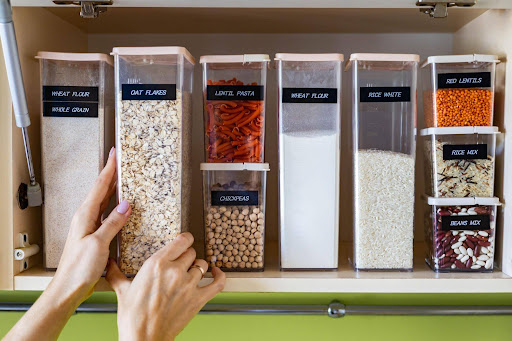
Group similar products together and use shelves, baskets, or containers where they genuinely improve visibility. Keep foods that need to be used soon somewhere you are likely to notice them.
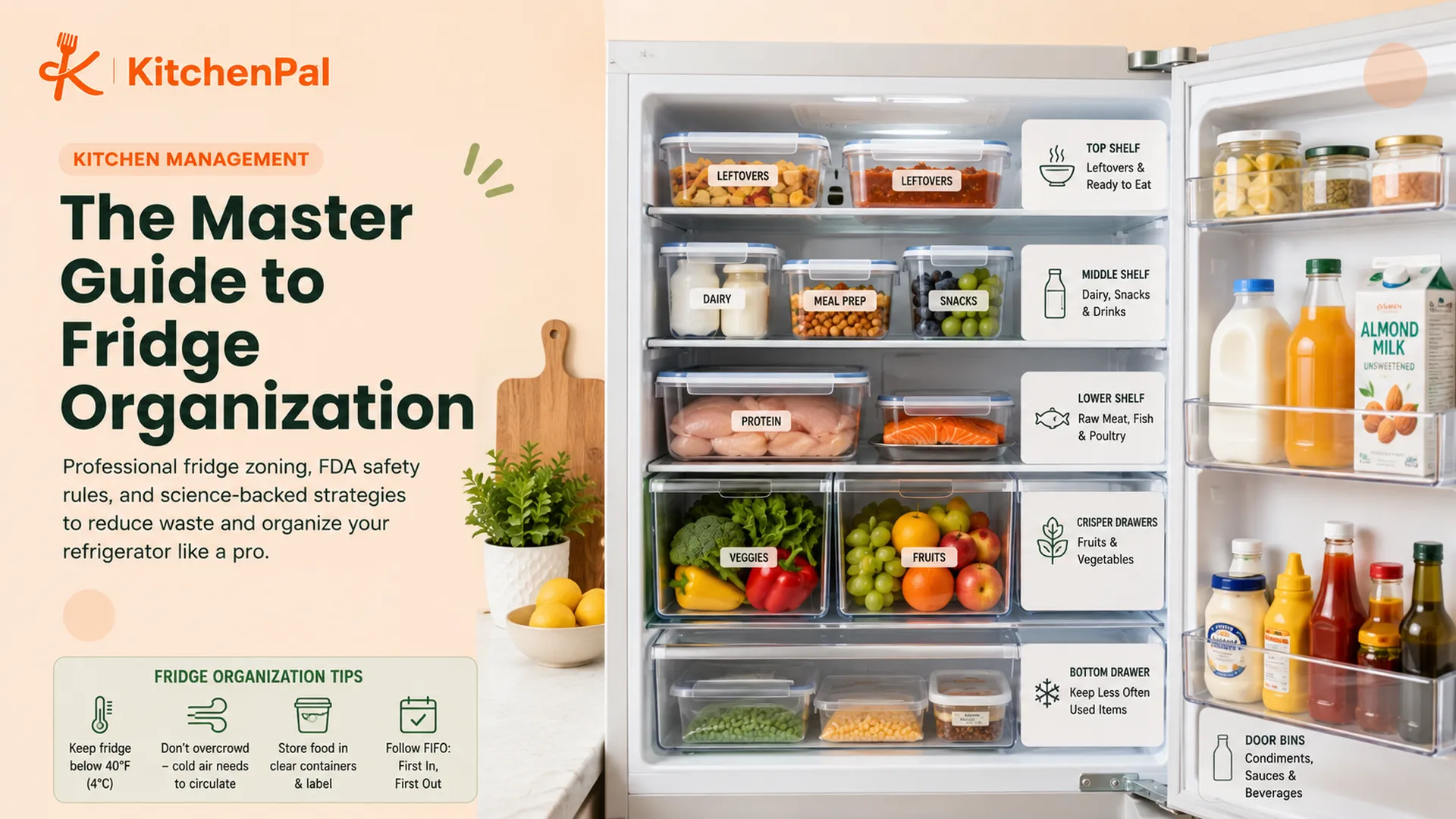
The same principle applies to your fridge organization. Leave enough space for items to be visible and easy to access.
Food safety matters here too. The FDA recommends keeping a refrigerator at 40°F (4°C) or below and a freezer at 0°F (-18°C). It also advises against overpacking a refrigerator because cold air needs to circulate properly.
2. Track What You Already Have
A kitchen inventory system can make food organization much easier.
Instead of relying entirely on memory, keep track of the foods stored in your pantry, refrigerator, and freezer. You do not necessarily need to record every small ingredient manually. Start with the foods you regularly buy, frequently forget about, or usually purchase twice.
Knowing what you already have can also make grocery planning easier. Before adding something to your shopping list, check whether it is already sitting in the pantry or freezer.
3. Check Expiration Dates and Rotate Older Food
When you bring home new groceries, move older products toward the front and place newer ones behind them. This simple first-in, first-out approach makes older food easier to notice.
Pay attention to the meaning of food date labels too. In the United States, USDA explains that dates such as "Best if Used By" generally indicate peak quality rather than safety, with infant formula being an important exception. Food stored properly can still be safe after a quality date, but discard the food if it shows signs of spoilage.
When restocking a pantry shelf, take a few seconds to move older products forward. This small habit makes food easier to see and can help you use it before newer purchases.
Rule 3: Build a System You Can Maintain
A kitchen can look perfectly organized today and become cluttered again next week.
That is why the best kitchen organization system is one that fits your normal routine. If maintaining it requires too many steps, it probably will not last.
1. Put Things Back After Use
Make returning items to their designated places part of your normal routine.
After cooking, put utensils, ingredients, cookware, and appliances back where they belong. When everyone in the household follows the same system, keeping the kitchen organized becomes much easier.
2. Reset Your Kitchen Regularly
You do not need to reorganize your entire kitchen every week.
Instead, use short resets to catch small problems before they become larger ones. Check crowded drawers, messy pantry shelves, forgotten leftovers, and areas where items keep accumulating.
Regular maintenance is usually easier than a major cleanup after weeks of clutter.
3. Check Your Food Before You Shop
One of the easiest ways to connect kitchen organization with grocery planning is to check what you already have before shopping.
Look through your pantry, refrigerator, and freezer. Identify foods that are running low and ingredients that should be used soon. Then create your grocery list around what you actually need.
This can help reduce duplicate purchases and make your grocery shopping trip more focused.
Keep your grocery list connected to your kitchen inventory. When you use the last of a regular staple, add it to your list rather than trying to remember it later.
How a Kitchen Inventory System Makes Organization Easier
Kitchen organization becomes easier when you know what is actually in your kitchen.
A kitchen inventory system can help you keep track of food quantities, identify items that need to be used, monitor products across the pantry, refrigerator, and freezer, and prepare a more accurate grocery list.
It can also support meal planning. If you know which ingredients you already have, you can look for recipes that use those foods instead of buying more ingredients unnecessarily.
For households that regularly shop, cook, and manage food for several people, keeping this information in one place can be more practical than relying on memory.
A Simple Kitchen Organization Routine
You do not need to spend hours organizing your kitchen. A simple routine can keep the system working.
Daily:
- Put items back after use.
- Clear unnecessary items from countertops.
- Store leftovers properly.
- Return frequently used ingredients to their places.
Weekly:
- Check the refrigerator and pantry.
- Move older food toward the front.
- Review leftovers and foods that need to be used soon.
- Restock frequently used items.
Monthly:
- Check deeper pantry and freezer areas.
- Remove food that is spoiled or no longer usable.
- Reorganize problem areas.
- Review items you rarely use.
Before Grocery Shopping:
- Check your pantry.
- Check your refrigerator and freezer.
- See what is running low.
- Identify foods that should be used soon.
- Create your shopping list based on what you already have.
Conclusion
Good kitchen organization does not require a perfect pantry or an elaborate storage system. It starts with a few habits that make your kitchen easier to use.
Give everything a place so items are easy to find. Keep food visible and track what you already have so ingredients do not disappear into the back of a shelf. Finally, create a maintenance routine that fits naturally into your day.
If you prefer to keep your pantry, refrigerator, and freezer inventory in one place, KitchenPal can help you track food, monitor what you have, manage grocery lists, and plan meals around the ingredients already at home. This can make it easier to maintain an organized kitchen without relying entirely on memory.