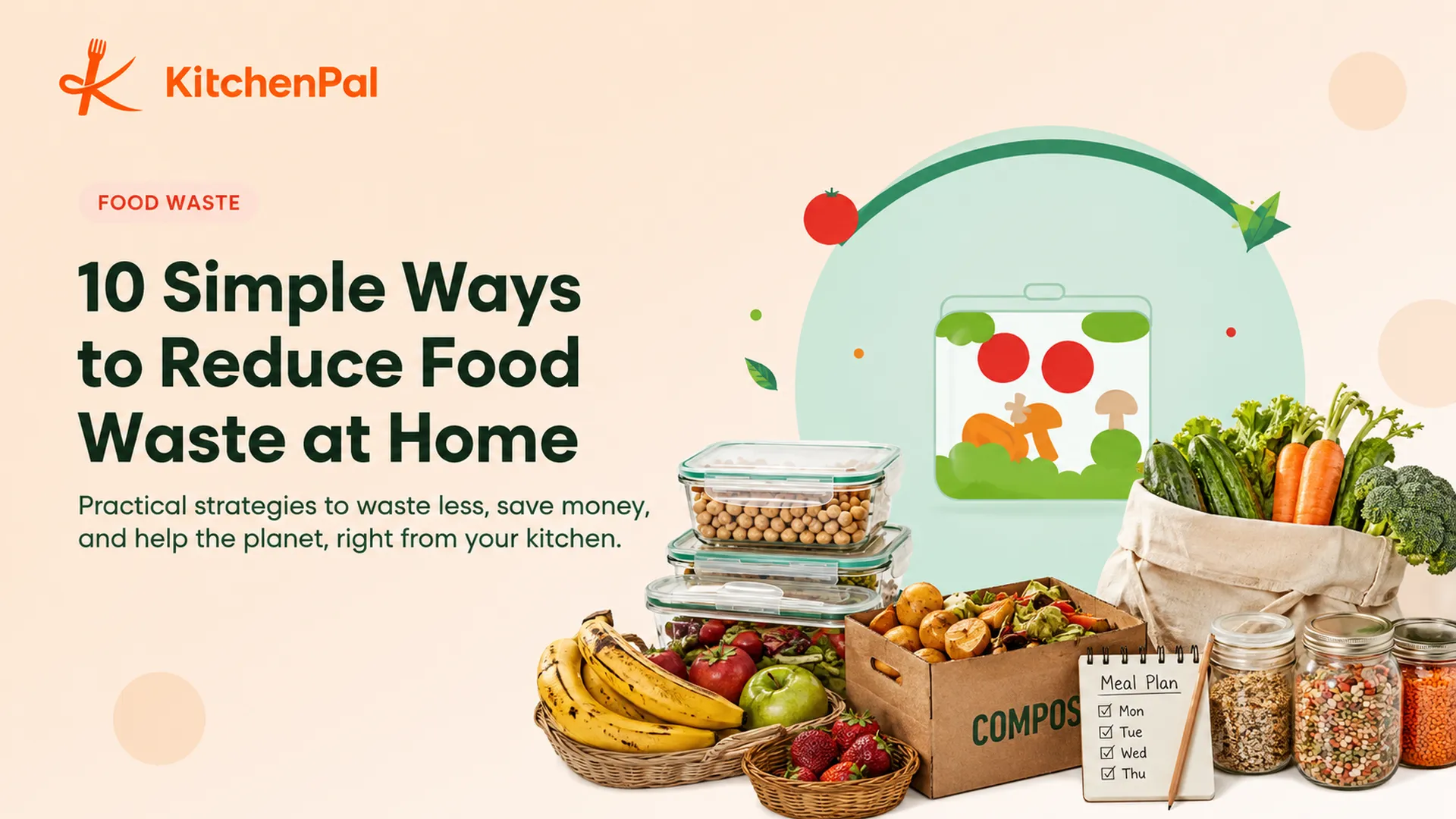
Did you know that the average family throws away approximately $1,500 worth of food every year? Not only does food waste hurt your wallet, but it also has a significant environmental impact. The good news is that reducing food waste at home is easier than you think!
In this comprehensive guide, we'll share 10 practical strategies that you can implement today to minimize waste, save money, and contribute to a more sustainable future.
1. Plan Your Meals and Make a Shopping List
The foundation of reducing food waste starts before you even go to the grocery store. Take 15-30 minutes each week to plan your meals and create a detailed shopping list. This simple habit helps you:
- Buy only what you need
- Avoid impulse purchases
- Ensure ingredients don't go to waste
- Save time and money
Use KitchenPal to check what's already in your pantry before making your shopping list. This prevents buying duplicates and helps you use what you have!
2. Store Food Properly
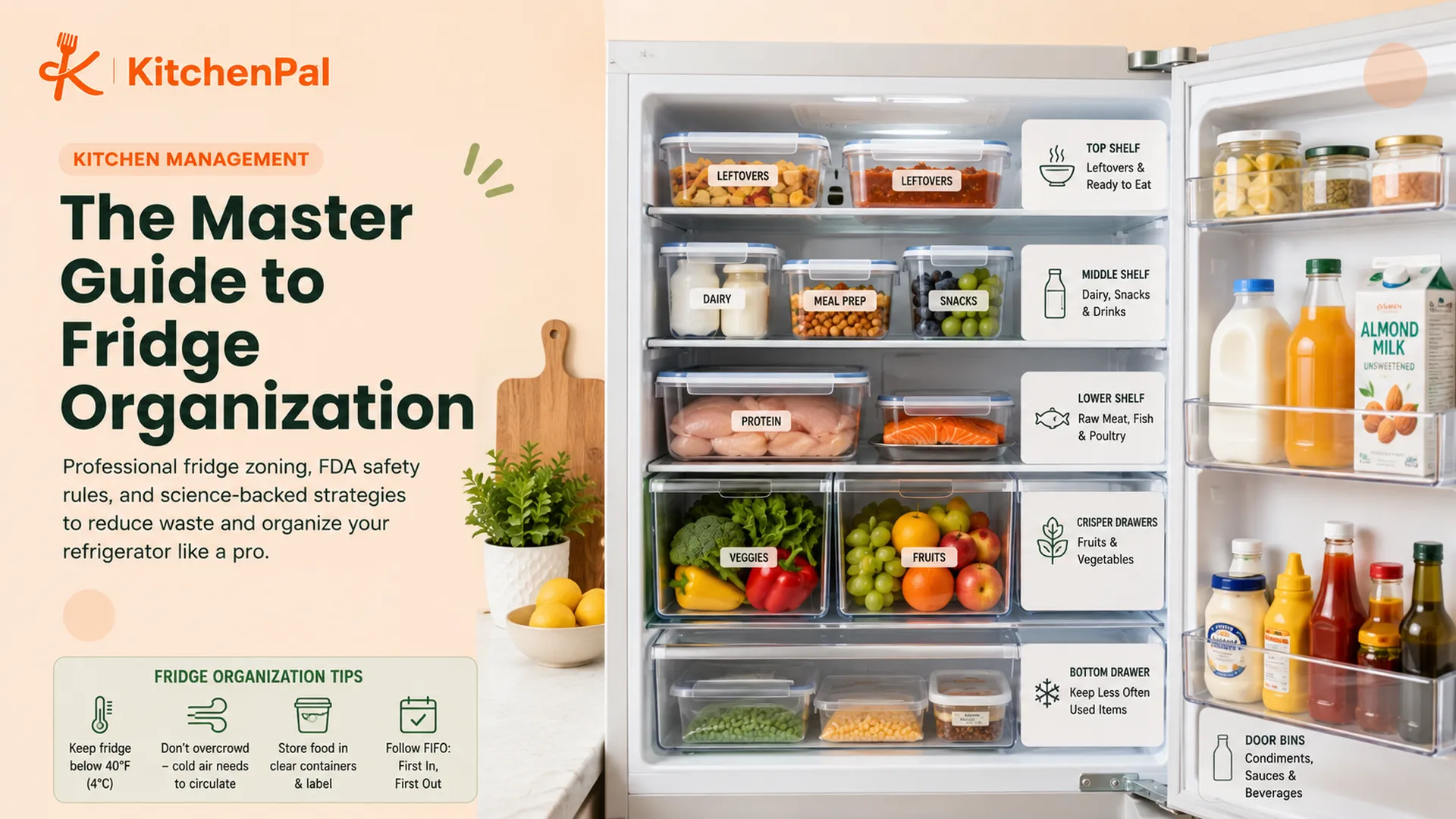
Proper storage can significantly extend the life of your food. Here are some key storage tips:
- Refrigerator: Keep temperature between 35-38°F (1.6-3.3°C)
- Freezer: Maintain at 0°F (-18°C) or below
- Pantry: Store in cool, dry places away from direct sunlight
- Fresh produce: Some items prefer room temperature (tomatoes, bananas), while others need refrigeration (berries, leafy greens)
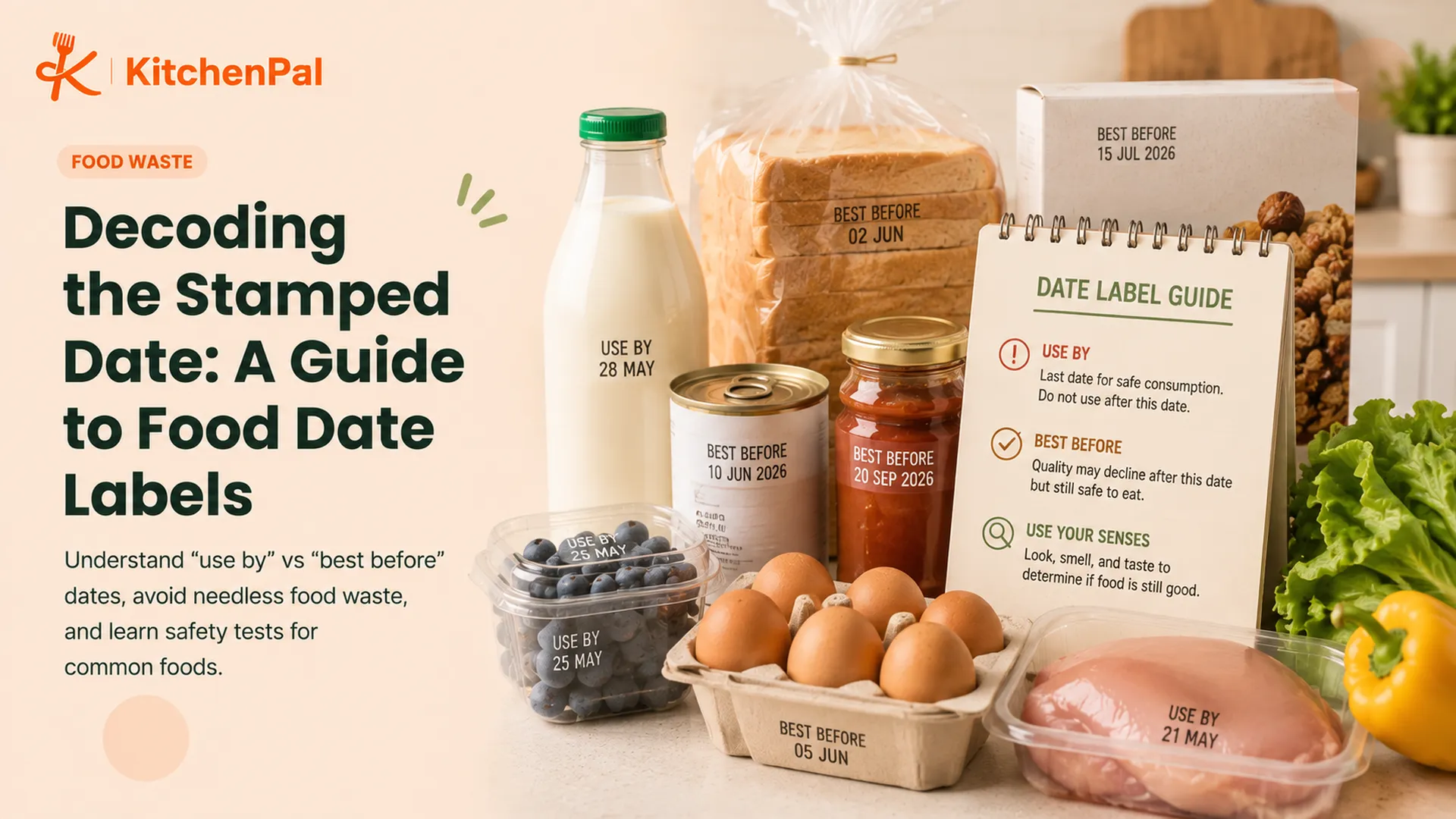
3. Understand Expiration Dates
Many people confuse "best by," "sell by," and "use by" dates, leading to unnecessary waste. Here's what they actually mean:
- "Best By": Suggested date for best quality, not a safety date
- "Sell By": For retailers, not consumers—products are still good after this date
- "Use By": The last date recommended for peak quality
Trust your senses! If food looks, smells, and tastes fine, it's usually safe to eat even past these dates.
4. Practice FIFO (First In, First Out)
Organize your pantry and refrigerator so that older items are at the front and newer purchases go to the back. This simple rotation system ensures you use older products before they expire.
5. Get Creative with Leftovers
Leftovers don't have to be boring! Transform yesterday's dinner into today's lunch with these ideas:
- Turn roasted vegetables into a frittata or soup
- Use leftover rice for fried rice or rice pudding
- Make sandwiches, wraps, or salads with leftover proteins
- Blend overripe fruits into smoothies or bake them into muffins
6. Freeze Strategically
Your freezer is your best friend when it comes to preventing waste. Almost anything can be frozen:
- Bread and baked goods
- Cooked meals and leftovers
- Fruits and vegetables (blanch first for best quality)
- Herbs in oil or butter
- Cheese and dairy products
Label everything with the date and contents. Set up expiry alerts in KitchenPal to remind you to use frozen items before they lose quality.
7. Compost Food Scraps
For unavoidable food waste like peels, cores, and eggshells, start composting! Composting turns food scraps into nutrient-rich soil for your garden, keeping waste out of landfills where it produces methane.
8. Buy Imperfect Produce
Cosmetically imperfect fruits and vegetables are just as nutritious and delicious as their picture-perfect counterparts. By choosing "ugly" produce, you help reduce waste at the retail level while saving money.
9. Portion Control
Cooking and serving appropriate portions prevents plate waste. Start with smaller servings—you can always go back for seconds if you're still hungry!
10. Track Your Waste
Knowledge is power! Keep a food waste diary for a week to identify patterns. Are you always throwing away salad greens? Maybe buy less frequently. Wasting bread? Store it in the freezer instead.
Use the Food Waste Tracker in KitchenPal to monitor what you're throwing away and get personalized recommendations for reducing waste!
Start Small, Make a Big Impact
You don't need to implement all these strategies at once. Start with one or two that resonate with you, build the habit, and gradually add more. Every small action adds up to significant results—for your wallet, your time, and our planet.
Remember, reducing food waste is a journey, not a destination. Be patient with yourself, celebrate your progress, and enjoy the benefits of a more organized, efficient, and sustainable kitchen!