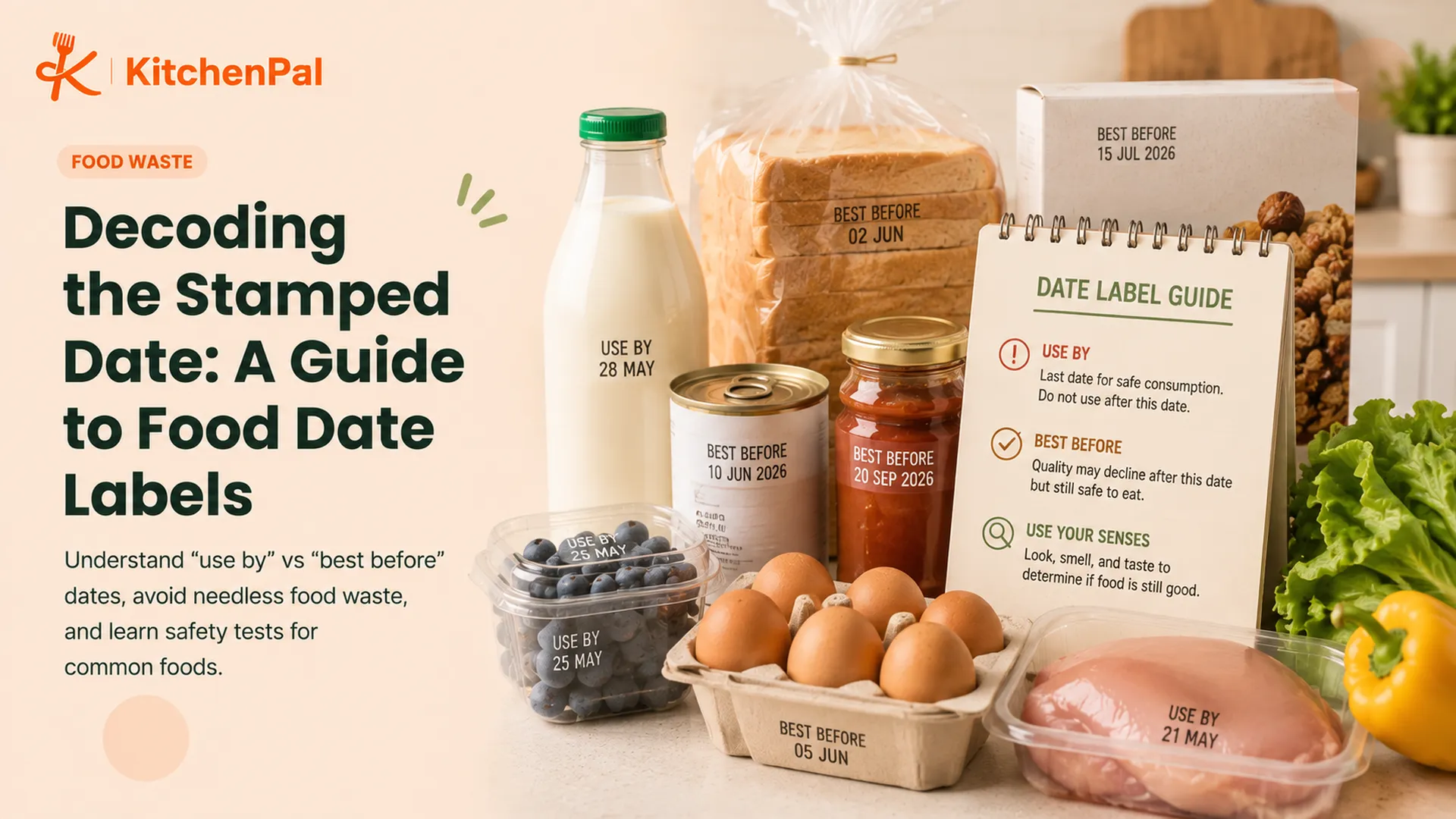
How much of the food in your refrigerator or pantry will you toss before it ever reaches the dinner table? Whether it is the package of hamburger buns left over from last summer's picnic, a carton of milk a few days past its "sell by" date, or carrots that have lost their initial crunch, households worldwide routinely discard perfectly edible food. According to global figures, the United States stands out as one of the worst offenders, with 37% of its total food waste originating from individual households. Critically, research reveals that roughly 20% of these safe grocery items are prematurely thrown into the trash because consumers simply do not know how to interpret the dates stamped onto their packaging.
For generations, the connection between where food was grown and where it was eaten was direct, and individuals relied heavily on their own senses—sight, smell, and touch—to assess whether an ingredient was fresh. However, with the rise of supermarkets and processed, multi-ingredient, pre-packaged items in the mid-20th century, gauging product age and viability became much harder. In response to consumer demand in the 1970s, a system known as "open dating" emerged, where manufacturers began applying various quality and timeline indicators.
Unfortunately, rather than providing clarity, this unregulated approach has created a confusing maze of jargon. To protect your wallet, optimize your health, and play a part in minimizing environmental damage, it is crucial to understand what these date labels actually mean, how they vary globally, and when you should follow them or rely on your personal judgment.
Part 1: What Do the Labels Actually Mean?
Food packaging features a variety of date marks, each serving a distinct purpose. The primary source of consumer confusion lies in failing to distinguish between dates intended to track retail inventory and those indicating safety or food quality.
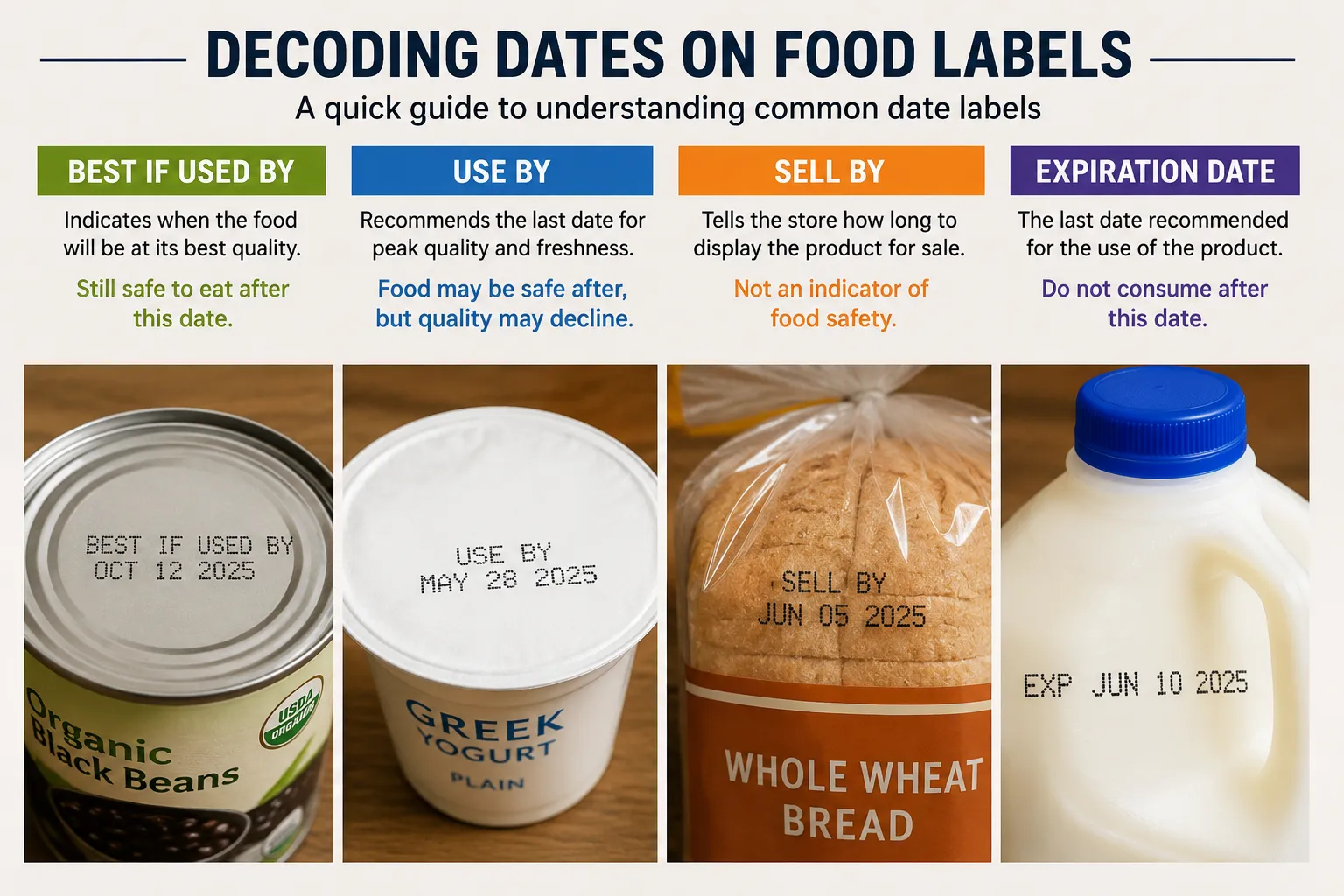
"Use By" Date: This is the most critical label regarding food safety. Predominantly used on highly perishable items (such as fresh fish, raw meat, meat products, and ready-to-eat salads), the "use by" date indicates the final day the product can be safely consumed. After this date, even if the food looks and smells perfectly fine, hidden pathogens and bacterial growth may make it dangerous to eat.
"Best Before" / "Best If Used By" Date: This metric concerns food quality, taste, and texture rather than biological safety. It represents the manufacturer's estimate of the period during which the product will remain at its peak flavor, crispness, and nutritional value. Once this date passes, the food does not automatically become hazardous or toxic; it simply might taste slightly stale, lose some color, or experience a minor alteration in texture.
"Sell By" / "Display Until" Date: These markings are strictly intended for retail logistics and store managers, not shoppers. They tell shopkeepers how long a product should remain visible on the shelf to allow for a reasonable post-purchase shelf life at home. Consumers can safely ignore these dates when evaluating whether food in their home refrigerator is fit to eat.
International Differences and Regulatory Fragmentation
The way these date labels are used and enforced varies dramatically depending on where you live. In the United States, the federal government does not mandate or uniformly regulate food expiration dates, with the single exception of infant formula. Instead, rules are left to a patchwork of state laws, leading to a system where food manufacturers have complete autonomy over how they pick "best by" dates. Most U.S. manufacturers choose conservative, early dates to guarantee that consumers experience their products in absolute peak condition, inadvertently driving premature disposal.
Conversely, the European Union (EU), the United Kingdom (UK), Australia, and New Zealand have standardized structures. Under EU Regulation No 1169/2011 and food standards systems in Australia and New Zealand, date labels are rigidly categorized into either "use by" (for safety) or "best before" (for quality).
However, standardizing these dates on a global level faces steep resistance. For example, in places like Singapore, which imports over 90% of its food from more than 170 countries, legislative efforts to mandate a single, strict definition face significant pushback. Over-regulation could ultimately lead overseas exporters to abandon the market entirely, threatening local food security and resilience.
Public Misunderstanding: The Statistics
The confusion surrounding these definitions has serious consequences. Synthesized data across global consumer studies, including comprehensive reviews by researchers like Szenderák and international food agencies, highlights a stark lack of public understanding:
- A staggering 90% of Americans admit to throwing out food prematurely due to date label confusion.
- Nearly 60% of consumers state they routinely discard any food item the moment it passes its stamped date, operating under the false impression that it has become dangerous.
- In various market studies, a significant majority of consumers could not accurately explain the distinction between a "best before" date and a "use by" date, frequently treating quality-based marks as absolute expiration thresholds.
Part 2: Why Understanding Labels Matters: Safety vs. Food Waste
Misinterpreting food dates creates a severe double-edged sword: it threatens food safety when consumers ignore highly critical warnings, and it accelerates global food waste when perfectly good food is thrown away.
The Food Waste Crisis and Environmental Strain
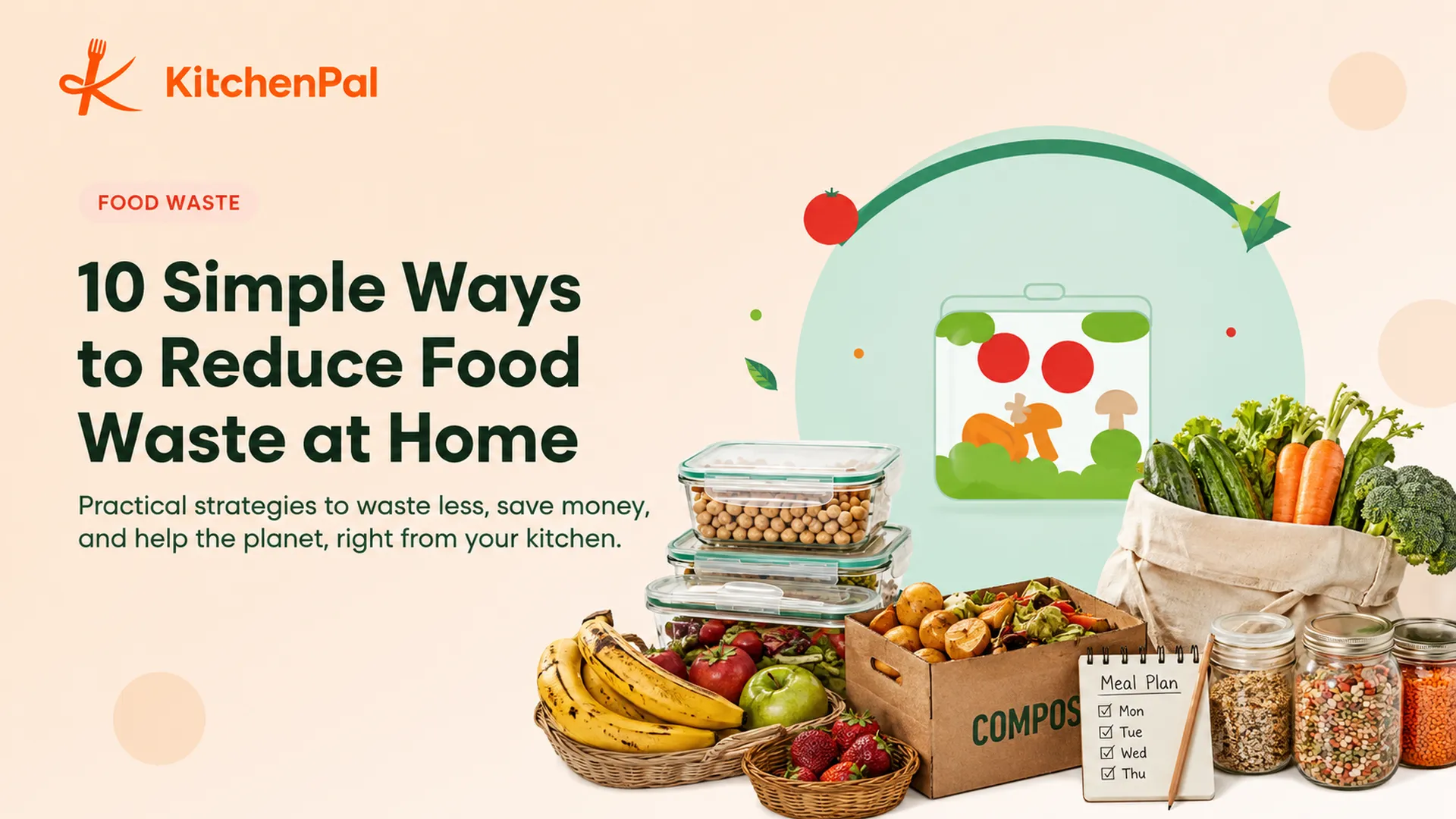
When safe food is tossed out, it represents a massive waste of precious natural resources. Every piece of fruit or carton of milk thrown away discards all the water, land, energy, labor, and capital invested in growing, processing, and transporting it.
The economic and ecological costs are staggering:
- The USDA estimates that Americans throw away the equivalent of $162 billion in food annually at retail and consumer levels.
- Confusion around expiration labels has prompted at least 20 U.S. states to place restrictions on donating food past its stamped date, despite federal laws explicitly protecting these charitable food donations.
- Conversely, progressive regulatory systems, such as those in France, legally require large supermarkets to donate unsold, safe items to food banks, regardless of quality-based packaging dates.
On an individual level, the financial toll is equally significant. In the United Kingdom, families discard roughly 7 million tonnes of food and drink each year, which translates to an unnecessary loss of approximately £700 per household.
The Food Safety Reality
While reducing waste is vital, ensuring biological safety is equally critical. Pathogens like Listeria monocytogenes, Salmonella, and E. coli reproduce silently in high-risk, perishable products. Food scientists calculate "use by" dates by placing food samples in microbiology labs that replicate real-world retail and home storage conditions. They monitor these samples for chemical changes and dangerous microbial thresholds; the final "use by" date is marked right before these pathogens exceed safe, tolerable limits.
Crucially, standard labels reflect normal, expected handling and temperature exposure. No label can account for human error or poor storage hygiene. If a carton of pasteurized milk with a "use by" date a week away is left in a hot car all afternoon, it can spoil and become unsafe long before the stamped date arrives.
Part 3: When to Follow, When to Ignore, and How to Trust Your Judgment
Navigating your kitchen requires a balanced, sensible approach: treat safety-oriented labels with strict discipline, but use your own senses to evaluate stable shelf-stable goods and produce.
When to Follow Stricter Guidelines
You should never compromise on high-risk, perishable items. Foods that carry a "Use By" stamp must be consumed or frozen by midnight of the printed date. Pregnant women, elderly individuals, and those with compromised immune systems must be particularly careful, as foodborne illness from these items can be severe. Once a package of raw meat or fish is opened, the clock accelerates, and it should typically be cooked or frozen within two days, regardless of the date printed on the exterior.
When to Ignore and Rely on Personal Judgment
For foods carrying a "Best Before" or "Best If Used By" label, the date should be viewed as a flexible guide. For un-refrigerated, dry shelf-stable items, there is often no danger of food poisoning after the date passes.
To combat systematic waste, major international grocery chains (such as several prominent supermarket chains in the United Kingdom) have completely removed date labels from fresh fruits and vegetables. This policy shift forces consumers to judge the product using their own senses rather than relying on an arbitrary date stamp.
Trusting Your Senses: The Visual, Olfactory, and Tactile Tests
Before throwing an item into the trash or compost bin, your eyes, nose, and tongue are usually the most reliable tools you have.
- The Sight Test: Inspect the food thoroughly. Look for signs of active spoilage, such as white, green, or black fuzzy mold spots, severe discoloration, or an unusual slimy film. For chocolate, a white powdery coating—known as "fat bloom"—is simply crystallized fat tracking to the surface due to air exposure; it is completely harmless and safe to eat.
- The Smell Test: Give the food a brief sniff. The human nose is naturally attuned to detect sour, putrid, pungent, or ammoniacal aromas produced by spoilage bacteria. If a product smells off or rancid, trust your instincts and discard it.
- The Touch Test: Check the food's texture. Leafy greens or carrots that have gone limp can often be revived by submerging them in ice-cold water. However, if fruits or vegetables have developed soft, squishy, deep rot spots, they should be thrown out.
Part 4: Food Longevity & Safety Testing Guide
The table below summarizes common household foods, detailing how long they typically remain viable past their printed date and how to test them for safety.
| Food Item | Shelf Life Extensions Past Printed Date | Spoilage Detection and Safety Testing Methods |
|---|---|---|
| Fresh Milk | 5 to 7 days past "Use By" / "Best Before" (if kept strictly refrigerated). | The Sniff and Sight Test: Pour a small amount into a glass. Look for curdling, clumping, or separation. Sniff for a sharp, sour, or acidic odor. |
| Yogurt | Up to 2 to 6 weeks past date (due to inherent lactic acid bacteria acidity). | Visual Inspection: A small amount of watery liquid (whey) on top is normal. Check for mold patches along the rim. If mold forms, discard the container; do not just scrape it off, as fungal spores can penetrate deep into soft foods. |
| Eggs | 3 to 5 weeks beyond the stamped date. | The Float Test: Place the egg in a bowl of deep, cold water. If it sinks to the bottom and lays flat, it is fresh. If it stands upright on the bottom, it is older but safe to cook. If it floats to the very surface, gases have built up inside; discard it. |
| Hard Cheese (e.g., Cheddar, Parmesan) | Months past the printed quality date. | Physical Evaluation: If surface mold develops on hard blocks, you can safely cut away the mold plus an extra inch around it. The remaining cheese is safe to eat. |
| Soft Cheese (e.g., Brie, Cream Cheese) | Follow the date closely; discard within 1 to 2 weeks of opening. | Safety Warning: Soft cheeses have high moisture levels. If mold is visible, discard the entire package immediately, as pathogens can spread easily throughout the product. |
| Raw Meat / Poultry | Strictly follow the "Use By" date; cook or freeze within 1–2 days of purchase. | Tactile and Olfactory Test: Check for a sticky, tacky, or slimy texture on the surface. Sniff for a sour or sulfurous odor. Discard immediately if these signs are present. |
| Tortilla Chips / Crackers | 1 to 2 months past the "Best Before" date if kept in a sealed container. | Texture Check: These items become stale due to moisture exposure rather than spoiling biologically. If they lose their crunch, bake them in an oven with a light spray of oil for a few minutes to re-crisp them. |
| Chocolate | Years past the quality date. | Visual Understanding: Disregard any dry white surface coating (bloom). It is completely safe to eat, though the mouthfeel might be slightly drier. |
| Leafy Greens & Carrots | Flexible; ignore arbitrary dates on fresh produce. | Revival Test: Look for yellowing or deep slime. If they are simply wilted or limp, soak them in an ice-cold water bath for 15–30 minutes to restore crispness. |
| Butter | 1–3 months | Check for rancid smell, discoloration, mold, or bitter taste. |
| Bread | 5–7 days | Inspect carefully for mold. Any visible mold means discard the entire loaf. |
| Breakfast Cereal | 6–12 months | Check for stale odor, insect activity, moisture, or rancid smell. |
| Dry Pasta | 1–2 years | Inspect for insects, moisture damage, mold, or off odors. |
| White Rice | 1–2 years | Check for insects, moisture, mold, or rancid smell. |
| Brown Rice | 3–6 months | Smell for rancidity due to natural oils; inspect for pests or mold. |
| Flour | 6–12 months | Check for insects, mold, moisture clumping, or sour/rancid smell. |
| Peanut Butter | 3–6 months | Look for rancid odor, oil separation beyond normal levels, mold, or unusual taste. |
| Canned Vegetables | 1–5 years | Never consume if can is bulging, leaking, rusted through, or sprays liquid upon opening. |
| Canned Soup | 1–3 years | Inspect can integrity; discard if swollen, dented at seams, leaking, or foul smelling. |
| Frozen Vegetables | 6–12 months | Check for freezer burn, package damage, or thaw/refreeze signs. Usually quality loss rather than safety risk. |
| Frozen Meat | 6–12 months | Look for excessive freezer burn, damaged packaging, or evidence of thawing and refreezing. |
| Deli Meat | 3–5 days | Check for slimy texture, sour smell, discoloration, or gas buildup. |
| Whole Fresh Beef/Pork Cuts | 3–5 days | Check for sour odor, tacky texture, or discoloration accompanied by odor. |
| Fresh Fruits (Apples, Oranges) | 1–4 weeks | Check for mold, soft spots, fermentation smell, or leaking juices. |
| Nuts | 3–6 months | Smell and taste for rancidity; check for mold or insect activity. |
| Honey | Indefinite if stored properly | Crystallization is normal. Discard only if contaminated by water, fermentation, or visible mold. |
Part 5: How KitchenPal Streamlines Food Management and Curbs Waste
Manually tracking the contents of your kitchen, remembering shifting dates, and knowing what to cook before items spoil can feel overwhelming. This is where modern mobile technology offers a practical solution. KitchenPal functions as an intelligent, all-in-one kitchen assistant designed specifically to bridge the gap between food safety and waste reduction.
Automated Pantry Inventory and Expiry Tracking
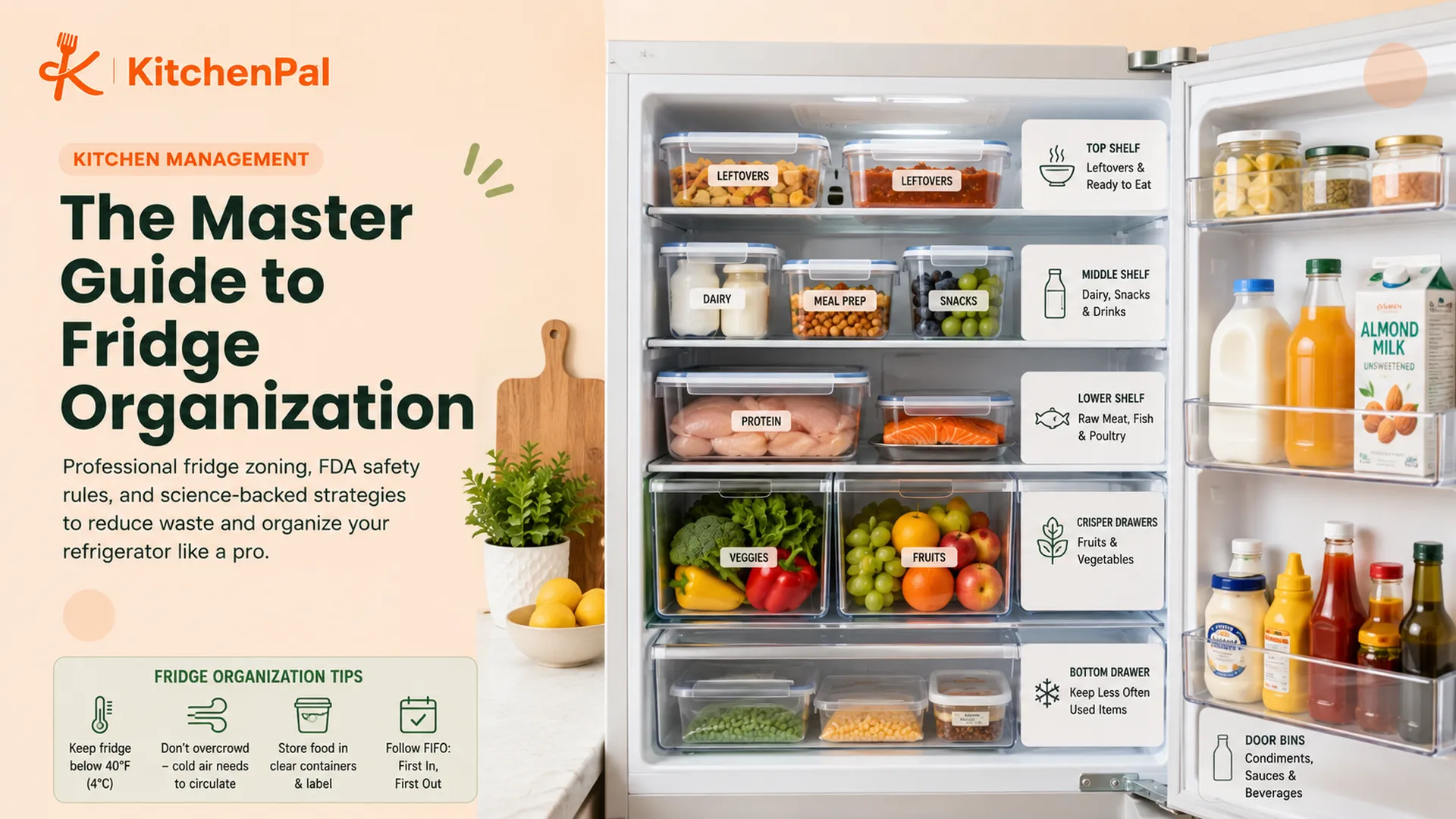
KitchenPal helps you organize your kitchen by dividing it into distinct digital zones, such as the pantry cupboard, refrigerator, and freezer. Users can quickly add items using a built-in barcode scanner, which references a vast database of over 5 million grocery products, or by using voice and text inputs.
Once logged, the app tracks food inventory levels and automatically assigns estimated expiration timelines—even using smart automation to predict lifespans for fresh produce. By monitoring your items in real time, KitchenPal sends automated notifications and alerts before your food reaches its expiration date, prompting you to act while the food is still fresh and safe.
Dynamic Recipes Based on Available Ingredients
One of KitchenPal's standout features is its recipe recommendation engine, which links directly to your live pantry inventory. Instead of suggesting generic recipes that require an extra trip to the store, the app scans millions of culinary ideas to find dishes you can make right now using ingredients you already have.
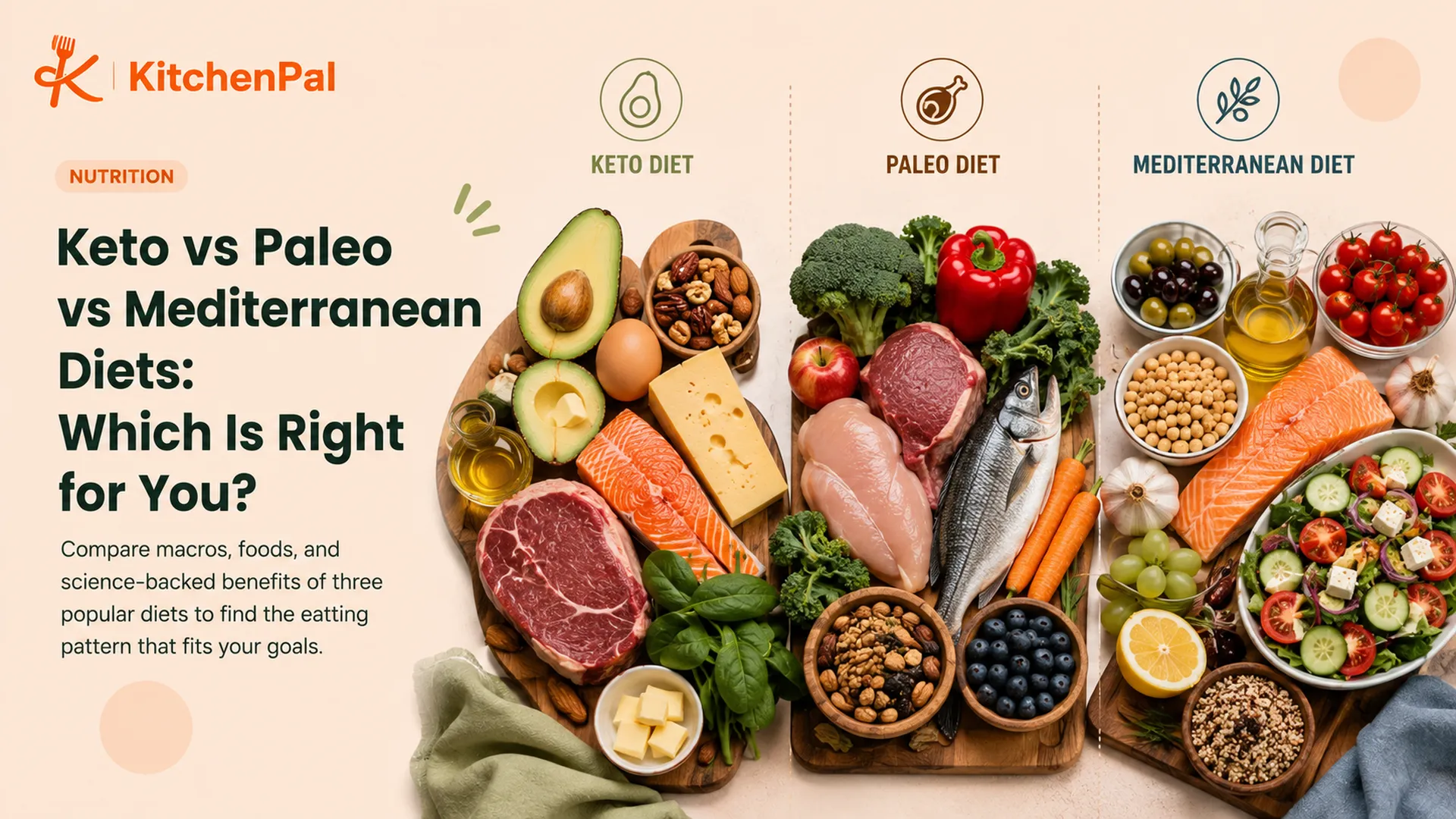
Crucially, the algorithm prioritizes recommending recipes that incorporate items closest to expiring. This ensures you use up ingredients before they spoil, helping your household save hundreds of dollars a year in wasted groceries. The app also accommodates specific dietary needs, offering filters for diets like Keto, Diabetes management, Low FODMAP, Paleo, Vegetarian, and Vegan.
Shared Grocery Lists and Smart Shopping
KitchenPal also prevents waste before it even enters your home through automated pantry checks. When items run low or hit their expiration date, you can quickly move them onto a shared grocery list.
The app generates automated recommendations based on your historical habits (such as items recently finished or frequently bought) and automatically syncs in real time across family members' devices. This keeps everyone aligned, helping you shop more efficiently, avoid buying duplicates, and eliminate the stress of meal planning.
Conclusion
The dates stamped on our food packaging are not absolute laws; they are helpful indicators that require a bit of context to interpret correctly. By understanding the distinction between safety-focused "use by" dates and quality-focused "best before" dates, you can protect your health while preventing perfectly good food from going to waste.
Relying on your natural senses is an excellent way to evaluate stable foods, and using smart digital tools like KitchenPal can help you stay organized. Taking control of your kitchen inventory is a simple, effective step that saves money, streamlines meal planning, and helps reduce environmental strain.