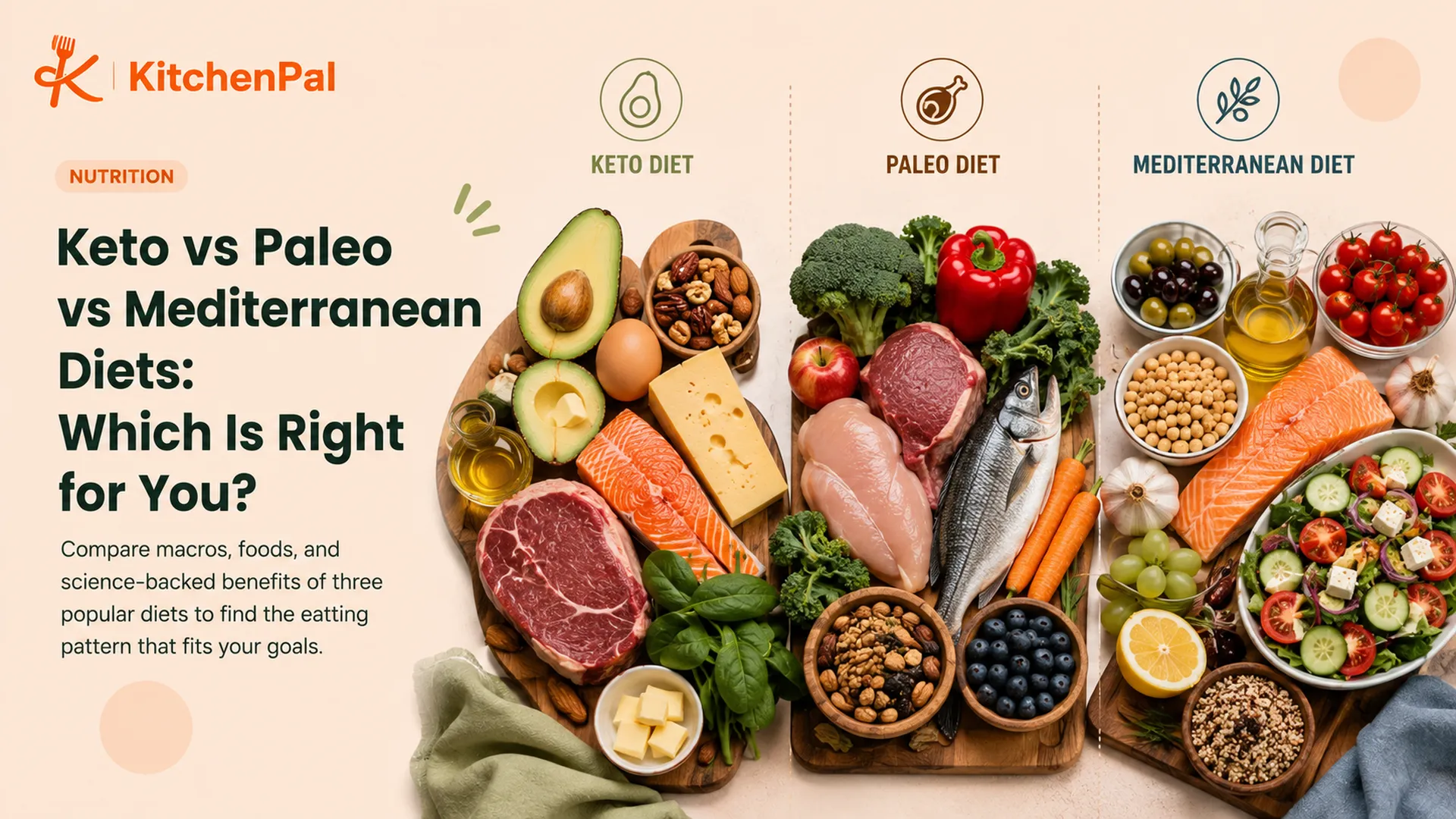
Over the past decade, the Ketogenic (Keto), Paleo, and Mediterranean diets have emerged as three of the most popular dietary approaches worldwide. While all three emphasize whole foods and reduced reliance on highly processed products, they differ substantially in their nutritional composition, food choices, scientific evidence, and long-term sustainability.
The best diet is not necessarily the one that produces the fastest weight loss, but rather the one that aligns with an individual's health goals, medical conditions, lifestyle, and ability to adhere to it over time.
Keto vs Paleo vs Mediterranean: At-a-Glance Comparison
| Category | Keto Diet | Paleo Diet | Mediterranean Diet |
|---|---|---|---|
| What it is | A very low-carbohydrate, high-fat diet designed to induce ketosis, where the body primarily burns fat and ketones for fuel. | A diet modeled on presumed hunter-gatherer eating patterns, emphasizing whole, unprocessed foods. | A dietary pattern based on traditional eating habits of Mediterranean countries, emphasizing plant foods and olive oil. |
| Typical Macronutrient Profile | 70–80% fat, 10–20% protein, 5–10% carbohydrate | 25–35% protein, 30–40% fat, 30–40% carbohydrate (varies) | 35–45% fat (mostly unsaturated), 15–20% protein, 35–50% carbohydrate |
| Primary Goal | Rapid fat loss, blood sugar control, therapeutic ketosis | Improved food quality and reduction of processed foods | Long-term cardiovascular and metabolic health |
| Level of Restriction | Very high | Moderate | Low |
| Long-Term Sustainability | Often challenging | Moderate | Generally high |
| Strength of Scientific Evidence | Moderate for weight loss and glycemic control | Moderate but limited long-term data | Strongest overall evidence base |
Foods Included and Excluded
| Category | Keto | Paleo | Mediterranean |
|---|---|---|---|
| Vegetables | Non-starchy vegetables | Most vegetables | Most vegetables |
| Fruits | Very limited | Allowed | Encouraged |
| Whole Grains | Excluded | Excluded | Encouraged |
| Legumes | Generally excluded | Excluded | Encouraged |
| Nuts & Seeds | Allowed | Allowed | Encouraged |
| Dairy | Often allowed (full-fat) | Usually excluded | Moderate amounts encouraged |
| Fish & Seafood | Encouraged | Encouraged | Strongly encouraged |
| Poultry & Meat | Allowed | Allowed | Moderate amounts |
| Red Meat | Allowed | Allowed | Limited |
| Olive Oil | Allowed | Allowed | Primary fat source |
| Processed Foods | Minimized | Excluded | Minimized |
| Added Sugar | Excluded | Excluded | Limited |
Nutritional Characteristics
Ketogenic Diet
The Keto diet restricts carbohydrates to approximately 20–50 grams per day, forcing the body into ketosis. During ketosis, ketones derived from fat become the body's primary energy source.
Key nutritional features:
- Extremely low carbohydrate intake
- High fat consumption
- Moderate protein intake
- Reduced insulin secretion
- Often lower fiber intake unless carefully planned
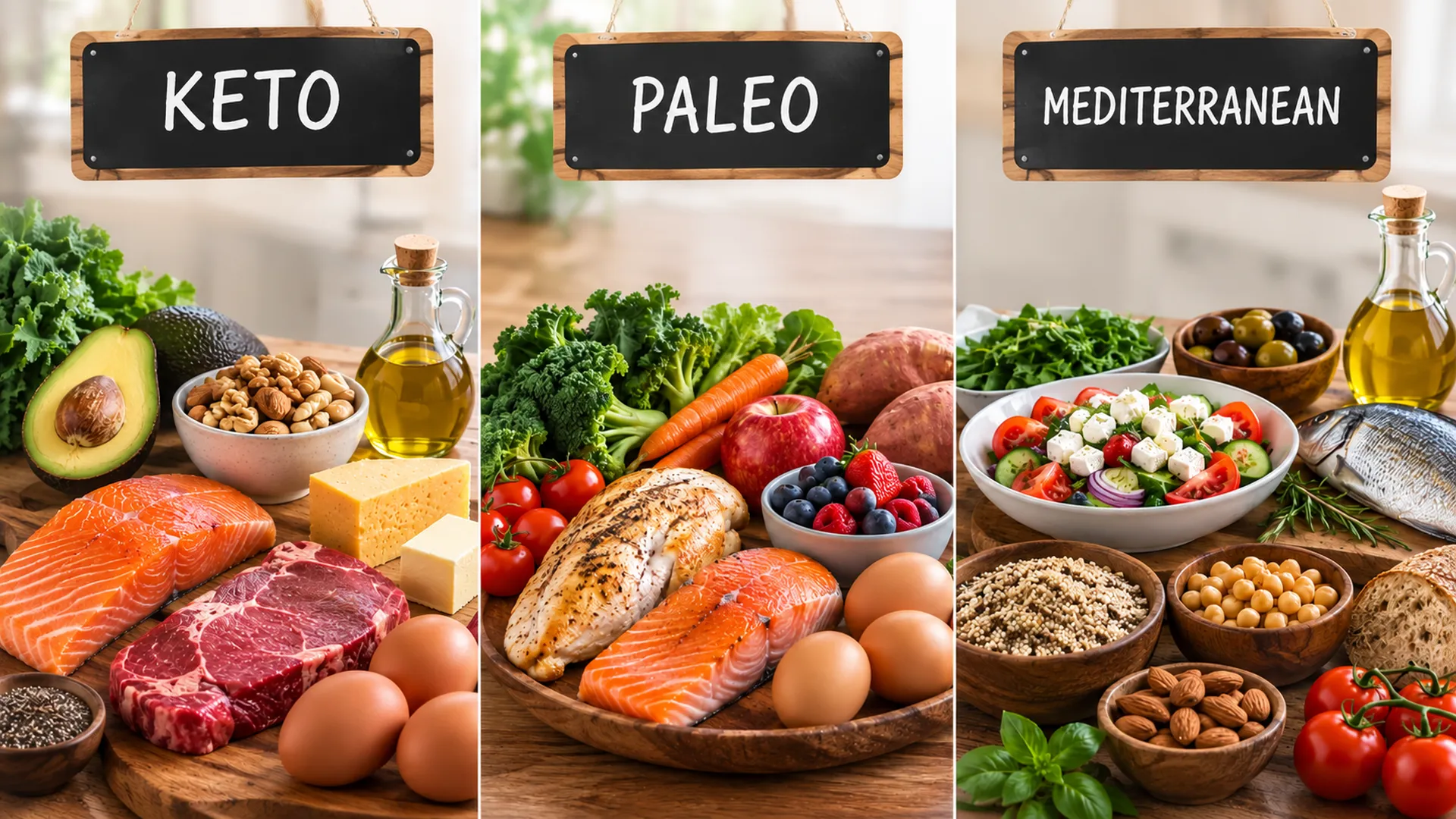
Common foods include eggs, meat, fish, avocado, olive oil, nuts, cheese, butter, and low-carb vegetables.
Paleo Diet
The Paleo diet attempts to mimic foods presumed to be available before agriculture. It excludes grains, legumes, dairy products, refined sugar, and processed foods.
Key nutritional features:
- High nutrient density
- Moderate-to-high protein intake
- Higher fiber intake than Keto
- Elimination of many processed foods
- Focus on whole-food eating
Common foods include lean meats, fish, eggs, fruits, vegetables, nuts, and seeds.
Mediterranean Diet
The Mediterranean diet is less a "diet" and more a lifestyle pattern. It emphasizes vegetables, fruits, legumes, whole grains, nuts, fish, and extra-virgin olive oil while limiting processed foods and red meat.
Key nutritional features:
- Rich in monounsaturated fats
- High fiber content
- Diverse plant foods
- High antioxidant intake
- Anti-inflammatory dietary pattern
Who Should Consider Each Diet?
| Goal | Keto | Paleo | Mediterranean |
|---|---|---|---|
| Rapid weight loss | Excellent | Good | Moderate |
| Type 2 diabetes management | Excellent (under supervision) | Good | Very good |
| Prediabetes / insulin resistance | Excellent | Good | Very good |
| Heart health | Mixed evidence | Moderate | Excellent |
| Long-term healthy aging | Moderate | Moderate | Excellent |
| Athletic endurance | Variable adaptation required | Good | Good |
| General healthy eating | Moderate | Good | Excellent |
| Sustainability for most people | Challenging | Moderate | High |
Advantages and Drawbacks
Ketogenic Diet
Advantages
- Often produces rapid initial weight loss
- Can significantly improve blood glucose control and insulin sensitivity
- May reduce appetite, making calorie restriction easier
- Established therapeutic use in epilepsy
- Emerging evidence suggests benefits for some metabolic disorders (SpringerLink)
Drawbacks
- Difficult to maintain long term
- Can reduce intake of fiber-rich foods
- Socially restrictive
- Some individuals experience increases in LDL cholesterol
- Long-term cardiovascular effects remain under investigation (Springer)
Paleo Diet
Advantages
- Encourages minimally processed foods
- Eliminates refined sugar and ultra-processed foods
- Typically increases vegetable intake
- May improve satiety and body composition
Drawbacks
- Excludes nutrient-rich food groups such as legumes and whole grains
- Can be expensive
- Scientific evidence is less extensive than for Mediterranean or Keto diets
- Dairy exclusion may reduce calcium intake
Mediterranean Diet
Advantages
- Strongest evidence base for long-term health
- Associated with lower cardiovascular disease risk
- Easier adherence than more restrictive diets
- Supports gut microbiome diversity
- Rich in antioxidants and anti-inflammatory compounds (ScienceDirect)
Drawbacks
- Weight loss may occur more gradually
- Portion control is still important
- Some individuals seeking rapid results may perceive it as slower than Keto
What Does the Latest Research Say?
Keto Diet: Research Findings
Recent evidence continues to support Keto for short-term weight loss and metabolic improvement.
- A major umbrella review of randomized clinical trials found that ketogenic diets can improve body weight, glycemic control, triglycerides, and certain metabolic markers, particularly in individuals with obesity and diabetes. (SpringerLink)
- A 2026 systematic review of 53 randomized controlled trials found significant reductions in triglycerides but also noted that lipid responses vary considerably among individuals, with some experiencing elevated LDL cholesterol. (Springer)
- Research published in 2025 also reported benefits for women with polycystic ovary syndrome (PCOS), including improvements in insulin resistance and hormonal markers. (Springer)
Overall scientific consensus: Keto is highly effective for short-term weight loss and metabolic control, but questions remain regarding long-term cardiovascular outcomes and adherence.
Paleo Diet: Research Findings
Research on Paleo diets is promising but less extensive.
Most studies show improvements in weight, waist circumference, blood pressure, and markers of metabolic syndrome compared with standard Western diets. However, many trials are relatively small and short-term.
The primary mechanism appears to be improved food quality—more vegetables, fruits, lean proteins, and fewer processed foods—rather than any unique metabolic effect.
Overall scientific consensus: Paleo can improve health markers primarily by replacing processed foods with nutrient-dense whole foods, but long-term evidence remains limited.
Mediterranean Diet: Research Findings
Among all dietary patterns, the Mediterranean diet has the strongest body of evidence.
- A 2024 update reviewing decades of observational and randomized trial data concluded that Mediterranean dietary patterns consistently reduce the risk of cardiovascular disease, coronary heart disease, and cardiovascular mortality. (ScienceDirect)
- A 2024 systematic review and meta-analysis in older adults found continued associations with lower cardiovascular events and mortality. (PubMed)
- Research also shows beneficial effects on gut microbiome composition, which may contribute to metabolic and immune health. (Springer)
- Additional long-term evidence published in 2026 suggests high adherence may reduce stroke risk by up to 25%. (The Guardian)
Overall scientific consensus: The Mediterranean diet remains the most consistently supported dietary pattern for longevity, cardiovascular health, and overall disease prevention.
Which Diet Wins?
The answer depends on the goal:
| If Your Goal Is... | Best Choice |
|---|---|
| Fastest weight loss | Keto |
| Blood sugar control | Keto or Mediterranean |
| Reducing processed foods | Paleo |
| Long-term heart health | Mediterranean |
| Healthy aging and longevity | Mediterranean |
| Sustainable lifestyle change | Mediterranean |
| Whole-food eating without calorie counting | Paleo |
| Therapeutic metabolic intervention | Keto (with medical supervision) |
Bottom Line
Keto, Paleo, and Mediterranean diets all improve health compared with a typical highly processed Western diet. However, they achieve these benefits through different mechanisms.
- Keto excels at rapid weight loss and glycemic control but can be difficult to sustain.
- Paleo emphasizes food quality and simplicity, though it excludes several nutritious food groups.
- Mediterranean offers the strongest scientific support for long-term cardiovascular health, longevity, and sustainability.
For most healthy adults seeking a lifelong dietary pattern, the Mediterranean diet remains the most evidence-based choice. For individuals with obesity, insulin resistance, or type 2 diabetes seeking faster metabolic improvements, a carefully planned ketogenic diet may provide greater short-term benefits. Paleo occupies a middle ground, offering a whole-food framework that many people find easier to follow than Keto while still improving diet quality.
But no matter which diet you choose, KitchenPal has you covered. With over a million recipes in our system, including recipes for Keto, Paleo, and Mediterranean diets, you can be assured you will always be able to find the right recipe for you. You can even choose to set more stringent filters in terms of total calories, grams of sugar, or protein per serving (and more) while looking for recipes, and we will find the ones that best suit your needs. And to make it even simpler, we will find the recipes that match with what's already available in your kitchen. And if there are any missing ingredients, they can always be added to your grocery list with a single click.