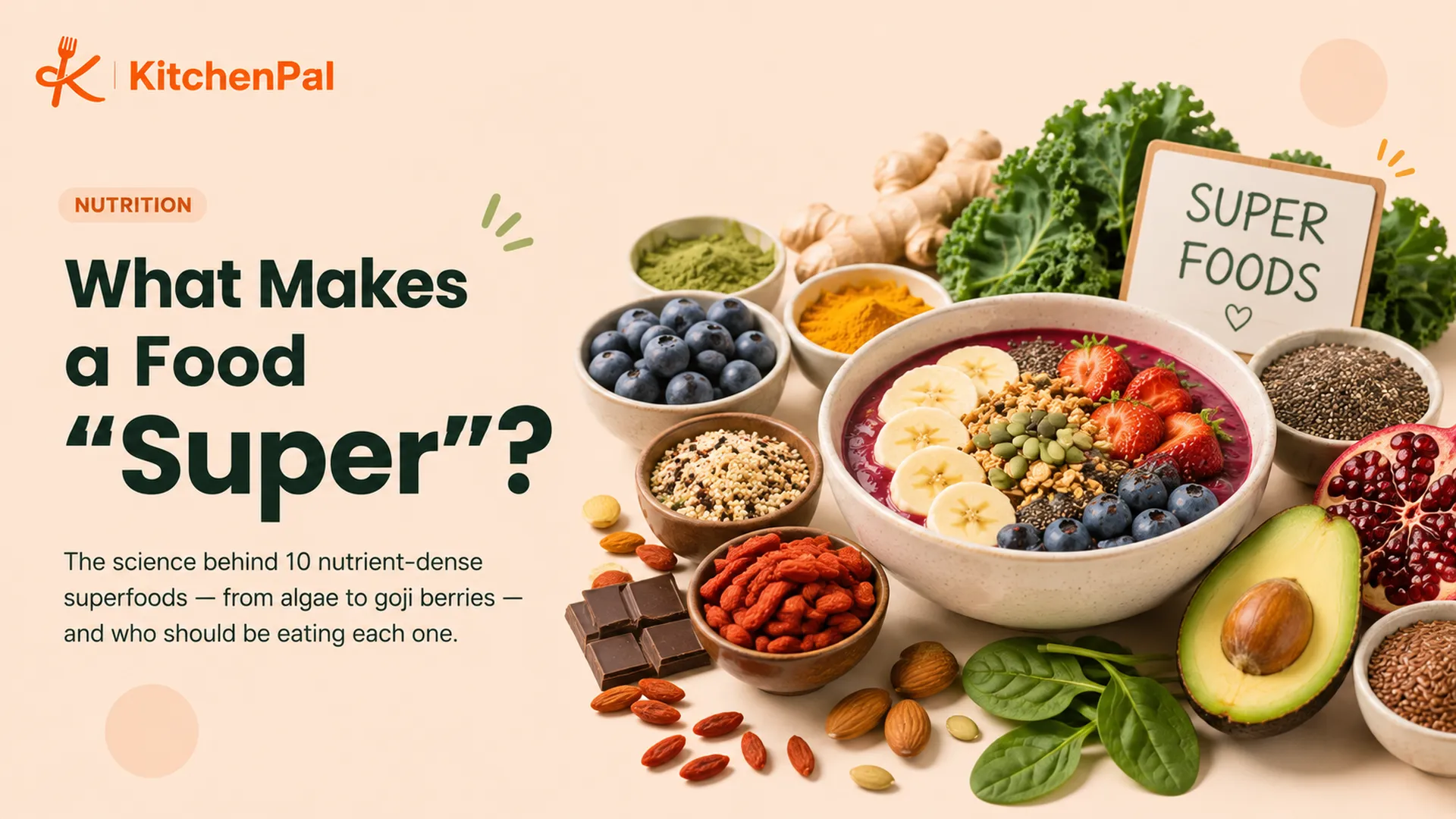
The term "superfood" is more than just a modern wellness buzzword; it refers to whole, nutrient-dense foods that offer an exceptionally high concentration of vitamins, minerals, antioxidants, and healthy fats relative to their calorie count. Unlike processed foods that provide empty calories, superfoods are structurally complex. They are packed with bioactive compounds—such as anthocyanins, unique plant sterols, complete essential amino acids, and specialized soluble fibers—that standard diets often lack.
Incorporating these foods into your daily routine is important because they act as a preventative baseline for long-term health. Rather than targeting just one ailment, the dense micronutrients in superfoods work synergistically to combat chronic inflammation, optimize metabolic function, eliminate oxidative stress, and feed a diverse gut microbiome. By understanding the specific science behind each superfood, you can intentionally use them to support targeted wellness goals—whether that means enhancing cognitive clarity, stabilizing blood sugar, or accelerating physical recovery.
Here's a list of some of our favourite superfoods, selected by members of the KitchenPal Team.
1. Algae (Spirulina, Chlorella, & Seaweed)
Key Science: Algae is one of the few plant sources that provides bioavailable, pre-formed omega-3 fatty acids (EPA and DHA), which are normally found in fatty fish.
The Evidence: According to reviews published in the National Institutes of Health (NIH) PMC, microalgae like spirulina contain phycocyanin—a powerful antioxidant and anti-inflammatory compound. Clinical data suggests regular intake can help regulate blood lipids, reduce blood pressure, and improve immune response. (NIH PMC)
Who It Is Recommended For: Vegans, vegetarians, and women navigating menopause. It provides an excellent plant-based alternative to fish oil for brain and heart health, while its high bioavailable iron, vitamin B12, and magnesium content help stabilize moods and protect bone density.
2. Lima Beans
Key Science: Lima beans are an exceptional source of dietary fiber, particularly soluble fiber, and trace minerals like molybdenum and iron.
The Evidence: The Harvard T.H. Chan School of Public Health highlights legumes like lima beans for their low glycemic index. Their high fiber content forms a gel-like substance in the digestive tract, slowing down glucose absorption and effectively preventing post-meal blood sugar spikes. (Harvard T.H. Chan School of Public Health)
Who It Is Recommended For: People managing Type 2 diabetes and those prone to anemia. The combination of resistant starch and soluble fiber stabilizes blood sugar, while a single cup provides roughly one-quarter of the daily recommended intake of iron to combat fatigue.
3. Edamame
Key Science: Edamame (young, green soybeans) is a "complete" plant protein, meaning it delivers all nine essential amino acids that your body cannot synthesize on its own.
The Evidence: Data compiled by Harvard's Nutrition Source points out that soy isoflavones (specifically genistein and daidzein) bind to estrogen receptors in the body. According to the American Heart Association (AHA), this structural action has been shown to help lower LDL ("bad") cholesterol and reduce the risk of cardiovascular disease. (Harvard Nutrition Source; American Heart Association)
Who It Is Recommended For: Individuals focusing on cardiovascular health and muscle building. It offers an incredibly dense, low-saturated-fat protein source that actively clears arterial plaque factors while supporting lean muscle repair.

4. Hemp Seeds
Key Science: Hemp seeds are packed with unique, highly digestible globulin proteins called edestin and albumin, along with an optimal 3:1 ratio of Omega-6 to Omega-3 fatty acids.
The Evidence: A comprehensive review in the journal Foods (archived on PubMed) details that hemp seeds feature a high concentration of the amino acid arginine. Arginine helps the body produce nitric oxide, which relaxes blood vessels and maintains healthy blood pressure. (Foods, via PubMed)
Who It Is Recommended For: People with high blood pressure, chronic inflammation, or insomnia. The heavy dose of magnesium (providing 50% of your daily value in a single serving) relaxes the nervous system to promote deeper sleep, while the healthy fats soothe systemic inflammation.
5. Quinoa
Key Science: Though prepared like a grain, quinoa is technically an edible seed that is naturally gluten-free and structurally dense in micronutrients.
The Evidence: The Harvard Nutrition Source classifies quinoa as a premier whole-grain substitute because it offers roughly 8 grams of complete protein and 5 grams of fiber per cooked cup. It is particularly rich in manganese, magnesium, and phosphorus, supporting bone density and metabolic health. (Harvard Nutrition Source)
Who It Is Recommended For: Those with celiac disease/gluten sensitivities, athletes, and anyone looking to replace refined carbs. Its complete amino acid profile repairs tissues, while its complex carbohydrates provide sustained, slow-release physical energy.
6. Blueberries
Key Science: Blueberries have one of the highest antioxidant capacities among all fruits and vegetables, driven primarily by a group of flavonoids called anthocyanins.
The Evidence: A landmark study published in The American Journal of Clinical Nutrition found that eating one cup of blueberries per day significantly improved vascular function and systemic arterial stiffness. Mayo Clinic also notes that these antioxidants can cross the blood-brain barrier to reduce oxidative stress associated with cognitive decline. (The American Journal of Clinical Nutrition; Mayo Clinic)
Who It Is Recommended For: Professionals doing intense cognitive work, older adults, and those prioritizing heart health. The anthocyanins act as a shield for brain cells, improving memory retention and protecting the vascular system from age-related stiffness.
7. Chia Seeds
Key Science: Chia seeds are the richest plant-based source of alpha-linolenic acid (ALA), an essential omega-3 fatty acid.
The Evidence: Clinical research detailed by Harvard Health shows that chia seeds can absorb up to 10 to 12 times their weight in water, forming a thick mucilage (soluble fiber). This slow-digesting gel increases satiety (fullness) and improves overall gut microbiome health by serving as a fuel source for beneficial gut bacteria. (Harvard Health)
Who It Is Recommended For: People managing weight, looking to curb mid-day cravings, or suffering from sluggish digestion. The water-absorbent gel dramatically extends the feeling of fullness and physically sweeps the digestive tract to promote regular bowel movements.
8. Acai
Key Science: Acai berries are unique because they are practically sugar-free but exceptionally high in healthy oleic and palmitic fats and plant sterols.
The Evidence: According to the NIH NCCIH, acai contains intense concentrations of anthocyanins and velutin, a compound known for its strong anti-inflammatory properties. Small-scale human trials indicate that regular acai pulp consumption can improve fasting blood sugar levels and cholesterol profiles in overweight adults. (NIH NCCIH)
Who It Is Recommended For: Fitness enthusiasts looking for post-workout recovery and individuals tracking strict low-sugar/keto diets. Its unique high-fat, low-sugar profile suppresses cellular inflammation from intense physical stress without causing a glucose spike.
9. Tempeh
Key Science: Tempeh is made from fermented soybeans. The fermentation process breaks down phytic acid (an anti-nutrient that binds minerals), drastically unlocking nutrient availability.
The Evidence: Studies in the Journal of Agricultural and Food Chemistry note that the fermentation of tempeh creates prebiotics that support gut health and drastically improves the bioavailability of iron, zinc, and calcium compared to unfermented soy. (Journal of Agricultural and Food Chemistry)
Who It Is Recommended For: People with sensitive stomachs, chronic bloating, or poor gut health. Because it is pre-digested by beneficial fungi during fermentation, it provides the massive protein benefits of beans without the gas or bloating, while feeding the gut microbiome.
10. Goji Berries
Key Science: Goji berries contain a highly specific class of antioxidants called Lycium barbarum polysaccharides (LBPs) alongside a massive dose of zeaxanthin.
The Evidence: A rigorous review in Oxidative Medicine and Cellular Longevity (found via NIH PMC) shows that the high concentration of zeaxanthin in goji berries directly supports eye health, protecting the retina from oxidative damage and reducing the risk of age-related macular degeneration. (Oxidative Medicine and Cellular Longevity, via NIH PMC)
Who It Is Recommended For: Individuals who experience heavy screen time or eye strain, and those looking to support their immune health. The specialized carotenoids accumulate directly in the retina to filter harmful blue light, while the LBPs act as a strong fuel source for immune cells.
So which ones are your favourites? And just to make sure you don't forget to stock up on your next grocery run, add them to your Shopping List on the KitchenPal app today. Not only will we help you keep track of your to-buy items, we will even help you find the right recipes to cook once you have them at hand.