Your freezer is the most underused tool in your kitchen for cutting food waste — but only if you're using it right. Freezer burn, mystery containers, and "I think that's chicken?" are all signs of a system that isn't quite working. With a few storage habits and a general sense of how long things actually keep, your freezer becomes a genuine extension of your pantry instead of a place things go to be forgotten.
Why Food Gets Freezer Burn
Freezer burn happens when moisture escapes from food and forms ice crystals on the surface, usually because of air exposure or poor sealing. It's not unsafe to eat, but it dries out texture and dulls flavor. The fix is almost always about the packaging, not the freezer itself.
- Push out as much air as possible before sealing bags — a straw works fine for manually removing air if you don't have a vacuum sealer.
- Use freezer-specific bags or wrap rather than regular storage bags or plastic wrap, which are more permeable to air.
- Double-wrap anything with sharp edges (bones, awkward shapes) that could puncture a bag.
- Freeze in flat, thin layers when possible — it freezes faster and thaws faster, both of which reduce ice crystal formation.
Freeze liquids like soup or sauce flat in a zip bag, laid on a baking sheet until solid. Once frozen, they stack like books — a huge space saver over a container.
Label Everything, Every Time
Frozen food loses its visual identity fast. What's obviously "beef stew" the day you freeze it becomes an unidentifiable brick within a couple of weeks. A simple label with the item name and freeze date takes ten seconds and saves you from playing freezer roulette later.
How Long Things Actually Keep
Frozen food stays safe indefinitely at a constant 0°F (-18°C), but quality drops over time. Here's a general guide for best quality:
| Food | Recommended Freezer Time |
|---|---|
| Raw ground meat | 3–4 months |
| Raw steaks, chops, roasts | 6–12 months |
| Raw poultry (whole or pieces) | 9–12 months |
| Cooked meat or poultry | 2–3 months |
| Soups and stews | 2–3 months |
| Bread and baked goods | 2–3 months |
| Vegetables (blanched) | 8–12 months |
| Fruit | 8–12 months |
| Butter | 6–9 months |
Set expiry alerts in KitchenPal when you freeze something, so you're reminded to use it while it's still at its best — instead of finding it a year later.
Organize by Zone, Not Just by Space
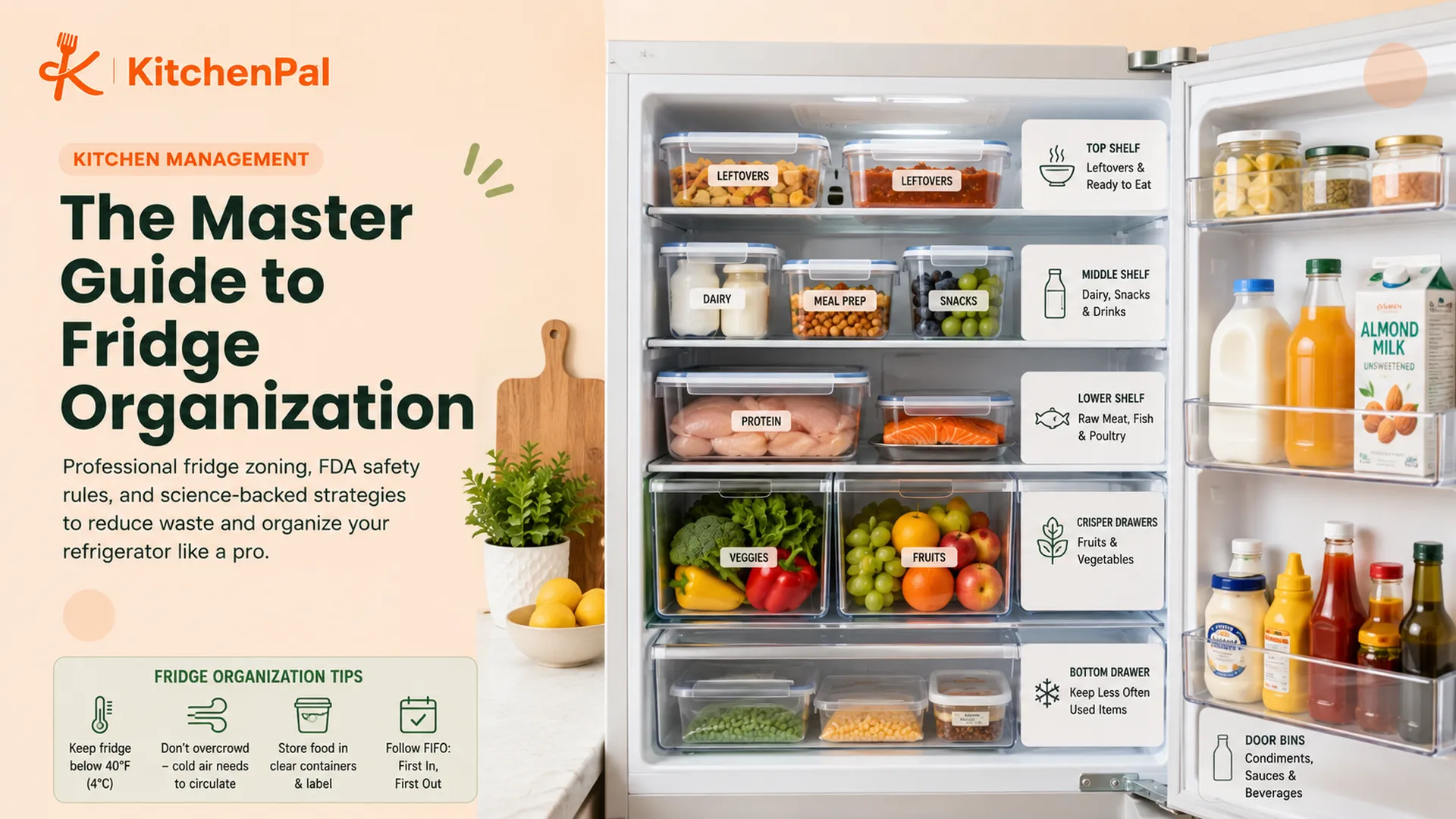
The same zoning logic that works for a pantry works for a freezer. Group similar items together and keep frequently used items easy to reach, instead of stacking everything in whatever order it was frozen.
- Door shelves: Items you grab often — bread, ice packs, quick snacks.
- Upper shelves: Ready-to-eat and prepared meals.
- Lower shelves/drawers: Raw meat and bulk items.
- Bins or baskets: Small loose items like frozen fruit, vegetables, or portioned leftovers — corral them so they don't scatter and get buried.
Blanch Vegetables Before Freezing
Raw vegetables frozen without blanching (a brief dip in boiling water, then ice water) tend to turn mushy and lose color and nutrients faster. A quick 2–3 minute blanch stops the enzyme activity that causes this, and makes a real difference in quality months later.
Thaw Safely
The safest ways to thaw food are in the refrigerator (slowest but safest), in cold water in a sealed bag (faster, needs monitoring), or in the microwave if cooking immediately after. Thawing on the counter at room temperature isn't recommended — it lets the outer layer sit in the food safety "danger zone" for too long before the center thaws.
Keep track of what's actually in your freezer: KitchenPal logs your frozen items alongside the rest of your pantry, with expiry reminders, so nothing gets lost at the bottom for six months.
A well-run freezer isn't about cramming in as much as possible — it's about labeling clearly, packaging to prevent freezer burn, and organizing so you can actually see what you have. Get those three things right and your freezer becomes one of the easiest ways to cut food waste in your whole kitchen.